Quick Breakdown
Shoulder impingement is one of the most common diagnoses given for shoulder pain, but the term doesn't always describe what's actually causing your symptoms. Rather than simply being a tendon "pinched" beneath a bone, shoulder pain is often influenced by muscle strength, shoulder mechanics, mobility, training loads, and movement patterns. At True Grit Physical Therapy, we perform a comprehensive evaluation to determine why your shoulder hurts so we can treat the underlying cause—not just the diagnosis.
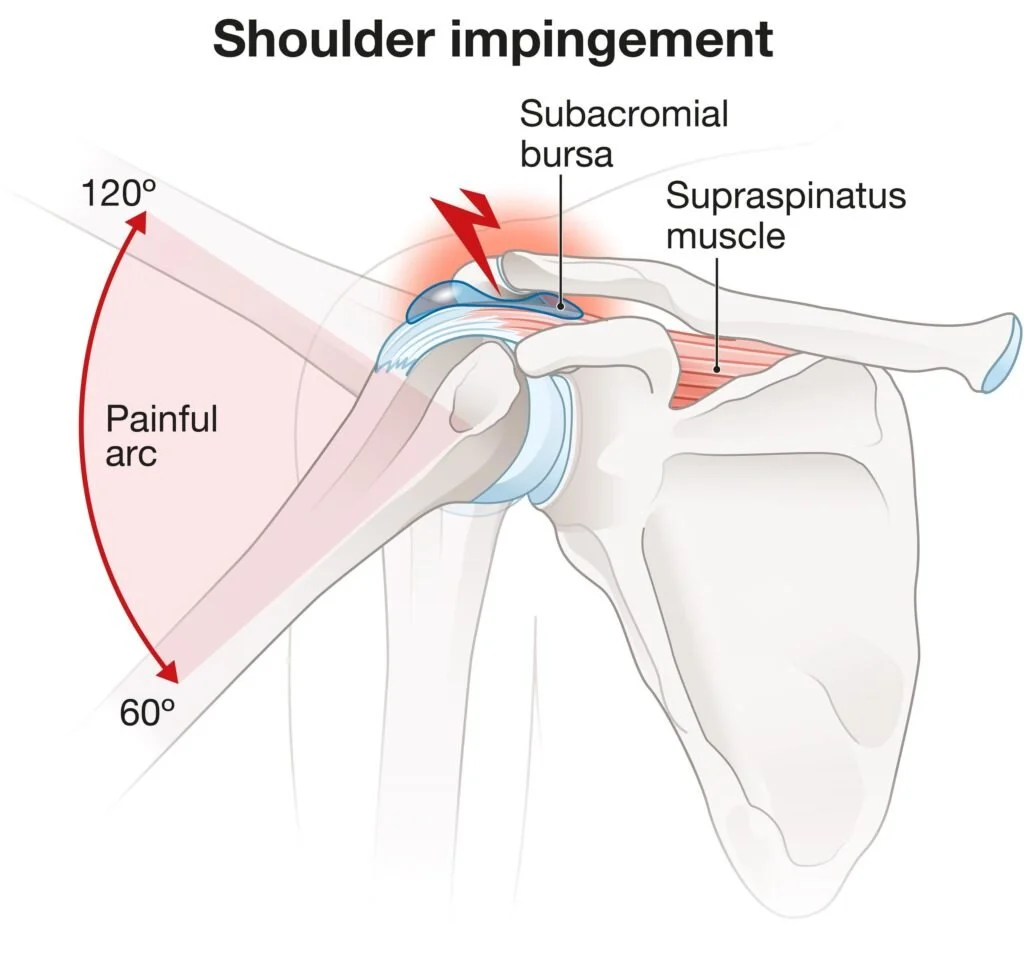
What Is Shoulder Impingement?
Shoulder impingement is one of the most common reasons people experience shoulder pain. You may notice discomfort when reaching overhead, lifting weights, throwing, or even reaching into a cabinet.
Although the name suggests that a tendon is being "pinched," modern research shows that shoulder pain is usually more complex.
Today, many healthcare providers use the term rotator cuff-related shoulder pain (RCRSP) because pain is often influenced by muscle strength, shoulder mobility, movement patterns, and how much load your shoulder can tolerate—not just a single structure being compressed.
Understanding why your shoulder hurts is the key to choosing the right treatment.
Common Symptoms
People with shoulder impingement or rotator cuff-related shoulder pain often notice:
Pain reaching overhead
Pain lifting objects away from the body
Pain while throwing
Pain reaching behind the back
Difficulty sleeping on the painful shoulder
Shoulder weakness
Pain during pressing exercises
Pain while putting on a shirt or jacket
Symptoms usually develop gradually, but they can also begin after a sudden increase in activity or repetitive overhead work.
Why Does It Happen?
Shoulder pain rarely has one single cause. Instead, it usually develops because several factors work together.
Common contributors include:
Sudden increases in training or activity
Repetitive overhead movements
Rotator cuff weakness
Weak shoulder blade (scapular) muscles
Poor muscular endurance
Limited upper back mobility
Reduced shoulder mobility
Poor movement coordination
Previous shoulder injuries
Not allowing enough recovery between activities
Think of it like driving a car with slightly misaligned tires. One trip isn't a problem, but repeated stress over time eventually causes wear. The same idea applies to your shoulder.
The Rotator Cuff Does More Than Create Strength
Many people think the rotator cuff's only job is lifting the arm.
Its main role is actually keeping the shoulder joint stable during movement.
The four rotator cuff muscles work together to keep the ball of the shoulder centered in the socket while larger muscles create movement.
When these muscles become weak or tired, other tissues may have to work harder. Over time, this can contribute to shoulder pain.
The Shoulder Doesn't Work Alone
The shoulder is part of a larger movement system.
Pain may be influenced by:
The shoulder joint
The shoulder blade (scapula)
The upper back (thoracic spine)
The neck (cervical spine)
Core strength
Hip and trunk control
Overall movement quality
For example, limited upper back mobility can force the shoulder to work harder overhead. Weak shoulder blade muscles can also change how your shoulder moves during lifting or throwing.
That's why we evaluate the entire movement system—not just the shoulder.
Do You Need an MRI?
Not always.
Many people with no shoulder pain have imaging findings such as:
Rotator cuff tears
Tendinopathy
Bone spurs
Labral changes
Thickening of the bursa
These findings become more common as we get older.
On the other hand, some people have significant shoulder pain even when imaging looks normal.
Imaging is helpful, but it should always be interpreted alongside your symptoms and physical examination. We treat people—not MRI reports.
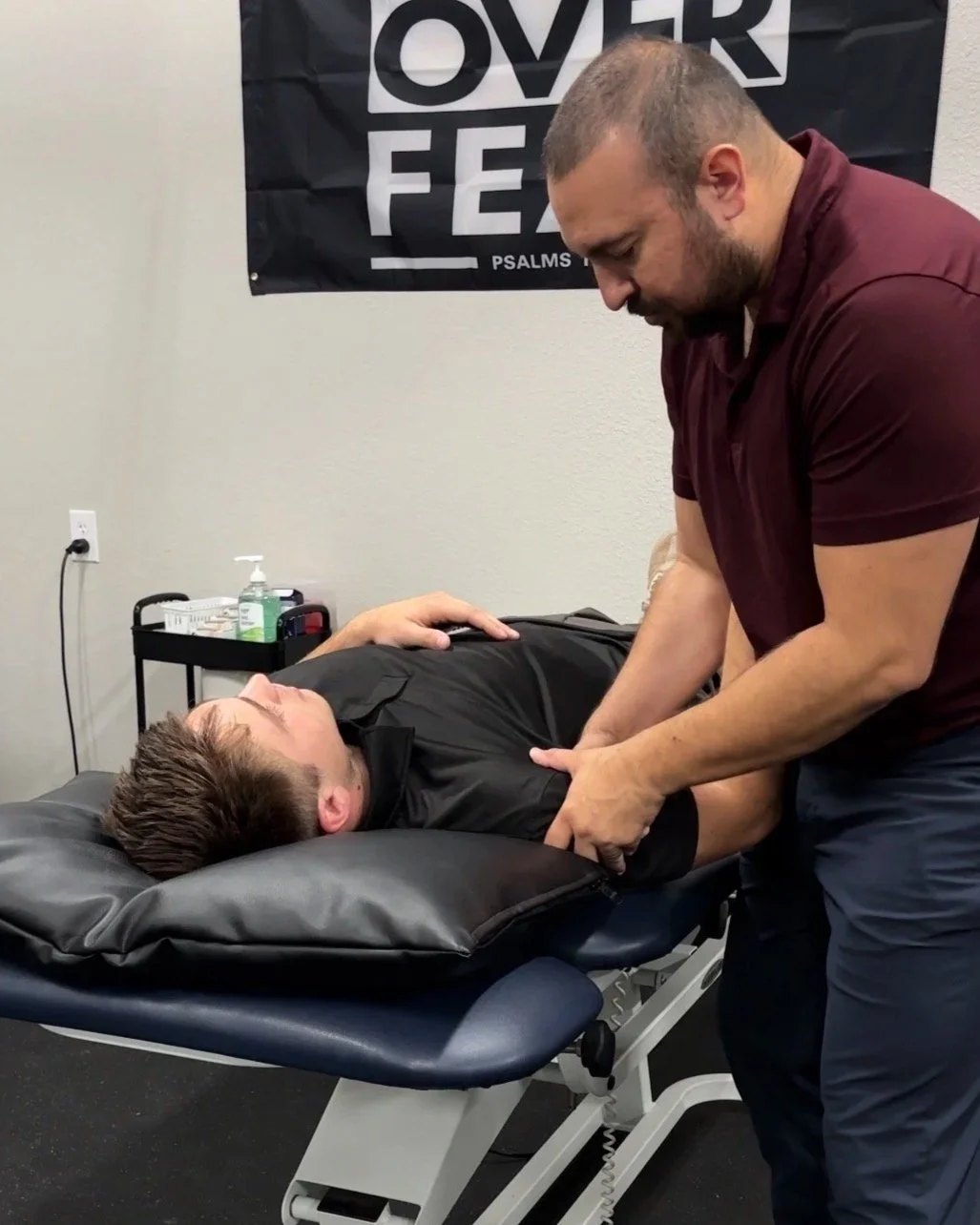
Our Evaluation Looks Beyond the Diagnosis
At True Grit Physical Therapy, we don't just confirm that your shoulder hurts—we determine why.
Your evaluation may include:
Shoulder range of motion
Rotator cuff strength testing
Shoulder blade (scapular) assessment
Muscular endurance testing
Upper back mobility assessment
Neck screening
Functional movement analysis
Sport- or work-specific testing
Load tolerance assessment
This helps us identify the underlying cause of your pain so your treatment is tailored to your needs.
How Physical Therapy Can Help
Most cases of shoulder impingement improve with conservative treatment.
Your rehabilitation may include:
Reduce Pain
Manual therapy
Activity modification
Build Strength
Rotator cuff strengthening
Scapular stabilization exercises
Progressive strengthening
Improve Movement
Thoracic mobility exercises
Motor control training
Sport-specific rehabilitation
Return-to-throwing or return-to-lifting programs
Our goal is to help your shoulder tolerate everyday activities, exercise, work, and sports without pain.
Should You Rest Your Shoulder?
Not completely.
Taking a short break from painful activities can be helpful, but avoiding all movement often leads to more weakness and stiffness.
Instead, we usually modify activities while keeping your shoulder moving safely.
This approach helps maintain strength, improve tissue tolerance, and support recovery.
Movement is often part of the solution—not something to fear.
When Is It Something More Serious?
Not every painful shoulder is caused by shoulder impingement.
Your evaluation also helps us identify conditions such as:
Full-thickness rotator cuff tears
Shoulder instability
Frozen shoulder (adhesive capsulitis)
Labral injuries
Pinched nerves in the neck
Shoulder arthritis
Fractures
Pain referred from other areas
Accurate diagnosis helps ensure you receive the right treatment—or a referral when needed.
The Bottom Line
Shoulder impingement is one of the most common explanations for shoulder pain, but the diagnosis alone doesn't explain why your symptoms developed. At True Grit Physical Therapy, we look beyond the label. We evaluate shoulder strength, mobility, muscular endurance, scapular control, thoracic spine mobility, cervical function, and movement mechanics to identify the true contributors to your pain. Because our goal isn't simply to stop your shoulder from hurting. It's to help your shoulder move better, tolerate more, and get you back to lifting, throwing, working, and living with confidence.