Quick Breakdown
A hip labral tear is an injury to the ring of cartilage that surrounds the socket of your hip joint. While labral tears can cause groin pain, clicking, catching, and stiffness, not every tear is painful—and not every painful hip has a labral tear. At True Grit Physical Therapy, we perform a comprehensive evaluation to determine whether the labrum is truly contributing to your symptoms and identify the movement impairments that may have led to your pain in the first place.
What Is a Hip Labral Tear?
If you've recently been told you have a hip labral tear, you're probably wondering: "Does this mean I need surgery?" Or maybe you've had an MRI that showed a labral tear—even though your symptoms aren't that severe. The truth is, a hip labral tear isn't always the cause of your pain. In fact, many people have labral tears without ever knowing it. Like many findings on MRI, a labral tear is one piece of the puzzle—not the entire picture. Understanding what the labrum does, how these injuries develop, and why some tears hurt while others don't is the key to making informed decisions about your treatment.
What Is the Hip Labrum?
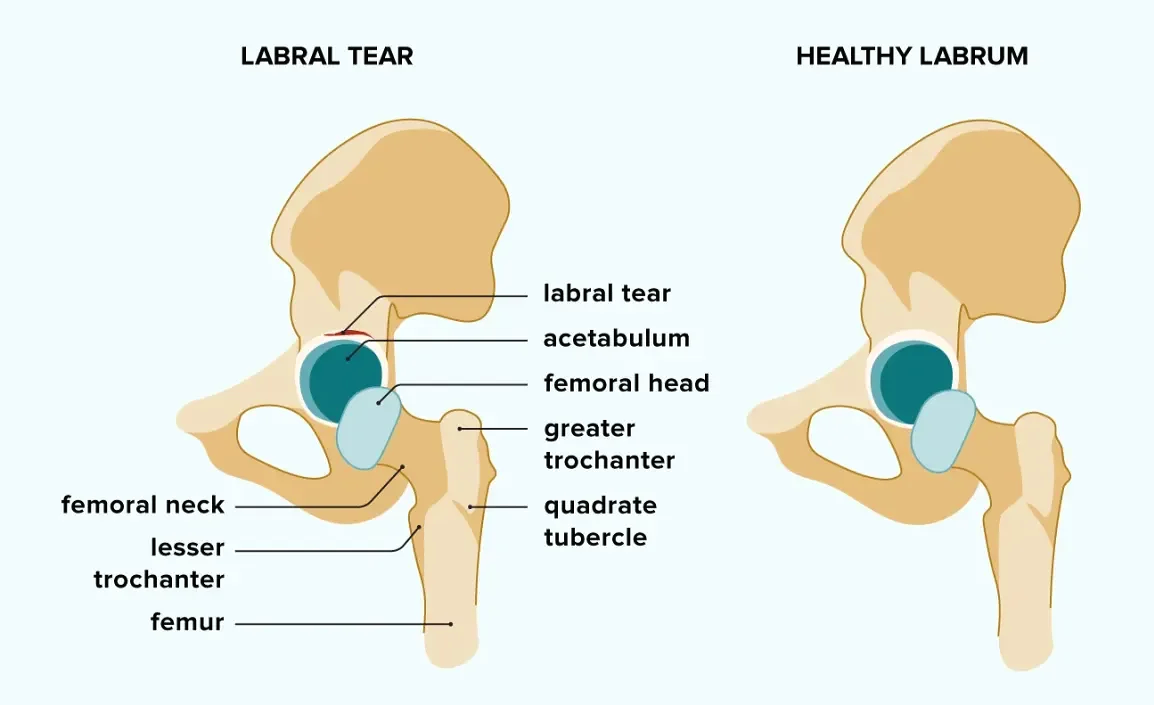
The hip is a ball-and-socket joint. The ball is the head of the femur and the socket is part of the pelvis, called the acetabulum. Surrounding the rim of the socket is a ring of strong cartilage known as the labrum. The labrum serves several important functions:
· Deepens the hip socket
· Improves joint stability
· Helps distribute forces across the joint
· Creates a seal that helps maintain joint lubrication
· Assists with smooth hip movement
Think of the labrum like the rubber seal around the lid of a food storage container. It helps create a stable, well-functioning environment inside the joint.
What Is a Labral Tear?
A labral tear occurs when this ring of cartilage becomes damaged. The tear may develop:
· Suddenly after trauma
· Gradually over time
· As a result of repetitive hip loading
· Secondary to structural differences within the hip
Some tears remain completely painless while others become irritated and contribute to movement-related pain. The important question isn't simply: "Is there a tear?" It's: "Is the tear actually causing your symptoms?"
What Causes a Hip Labral Tear?
Labral tears develop for several different reasons including: repetitive movement, trauma, and Femoroacetabular Impingement (FAI).
Repetitive Movement
Sports that require repeated hip rotation and deep flexion can gradually increase stress on the labrum. Examples include:
· Running
· Soccer
· Hockey
· Dance
· Gymnastics
· Golf
· Tennis
· Weightlifting
Trauma
Labral tears may also occur following:
· Falls
· Car accidents
· Hip dislocations
· Sudden twisting injuries
· High-impact sports
Femoroacetabular Impingement (FAI)
One of the most common contributors is femoroacetabular impingement (FAI). With FAI, the altered shape of the ball or socket causes increased contact during certain hip
movements. Over time, this repeated contact may place additional stress on the labrum. However, it's important to remember that many people have FAI changes without pain.
Common Symptoms
When a labral tear is symptomatic, people often report:
· Deep groin pain
· Pain during prolonged sitting
· Clicking or popping
· Catching sensations
· Locking of the hip
· Pain with twisting or pivoting
· Stiffness
· Pain after running
· Pain during deep squats
These symptoms can overlap with many other hip conditions. That's why a thorough examination is essential.
MRI Doesn't Always Tell the Whole Story
One of the biggest misconceptions about hip labral tears is that an MRI automatically explains your pain. Research consistently shows that many people—especially active adults and athletes—have labral tears without experiencing any symptoms. Similarly, someone may have significant hip pain despite relatively normal imaging.
Imaging findings should always be interpreted alongside:
· Your symptoms
· Physical examination
· Functional limitations
· Activity level
· Movement assessment
We treat people—not MRI reports.
Why Does a Labral Tear Become Painful?
The labrum rarely becomes irritated for no reason. Several factors often contribute to the pain, including:
· Hip weakness
· Reduced muscular endurance
· Limited hip mobility
· Poor movement mechanics
· High training loads
· Inadequate recovery
· Core weakness
· Reduced single-leg stability
Think of the labrum like the tread on a tire. If the car's alignment is off, replacing the tire without correcting the alignment doesn't solve the underlying problem. Similarly, addressing the movement impairments surrounding the hip is often just as important as understanding the tear itself.
Our Evaluation Goes Beyond the MRI
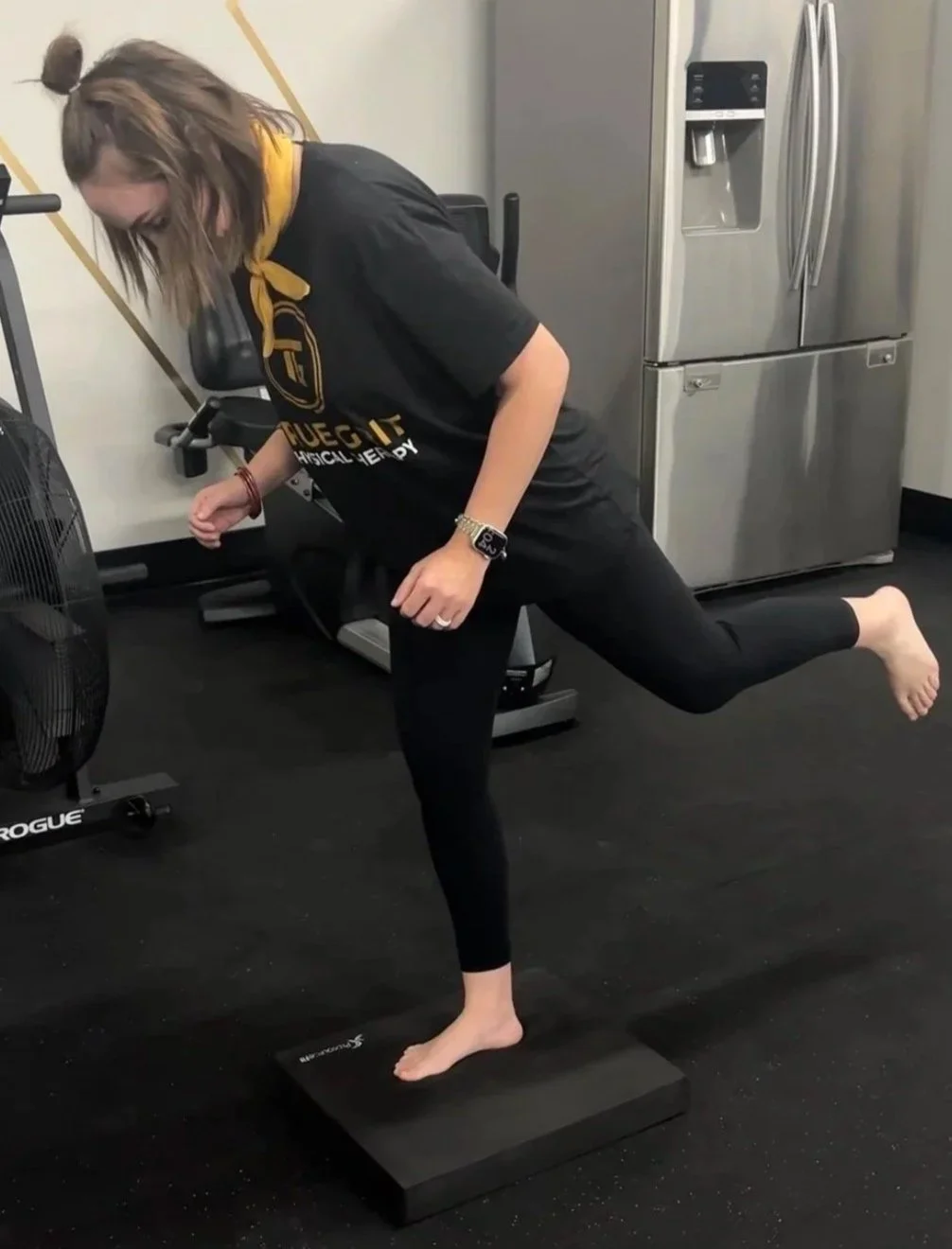
At True Grit Physical Therapy, we don't simply ask whether your MRI shows a tear. We determine whether the tear is actually contributing to your symptoms. Our comprehensive evaluation may include:
· Hip range of motion
· Hip strength testing
· Muscular endurance assessment
· Functional movement analysis
· Single-leg balance testing
· Squat assessment
· Running analysis when appropriate
· Lumbar spine screening
· Core stability assessment
· Sport-specific testing
This allows us to identify the movement impairments that may be increasing stress on the hip.
Can Physical Therapy Help?
For many individuals, yes. Current research supports conservative treatment as an appropriate first step for many symptomatic labral tears, particularly when there isn't significant mechanical locking or advanced joint degeneration. Your rehabilitation may include:
· Manual therapy
· Hip mobility exercises
· Gluteal strengthening
· Core stabilization
· Progressive strengthening
· Motor control training
· Balance training
· Running or gait retraining
· Sport-specific rehabilitation
· Progressive return-to-sport programming
The goal isn't simply to reduce pain. It's to improve the hip's ability to tolerate the demands placed upon it.
When Is Surgery Considered?
Not every labral tear requires surgery. However, surgical consultation may be appropriate if:
· Conservative treatment has failed
· Significant mechanical locking persists
· Symptoms continue to limit daily function
· Large structural abnormalities are present
· Hip instability exists
· Your orthopedic surgeon believes the tear is contributing significantly to your symptoms
Even when surgery is recommended, physical therapy often plays an important role both before and after the procedure.
What About Running and Sports?
Many runners and athletes successfully return to high levels of activity after a labral tear. The key is restoring:
· Hip strength
· Muscular endurance
· Mobility
· Balance
· Movement quality
· Sport-specific capacity
Rather than relying on time alone, we use objective testing to help determine when your body is truly ready to return safely.
The Bottom Line
A hip labral tear is a tear in the ring of cartilage surrounding the hip socket, but the presence of a tear doesn't automatically explain your pain or determine your treatment. At True Grit Physical Therapy, we look beyond the MRI by evaluating hip strength, mobility, muscular endurance, core stability, movement quality, lumbar spine function, and sport-specific demands. By identifying the true contributors to your symptoms, we develop an individualized rehabilitation plan that helps you move better, reduce pain, and confidently return to the activities you enjoy. Because successful treatment isn't about chasing MRI findings. It's about understanding why your hip hurts—and restoring the way your body moves.