Quick Breakdown
Hip labral tears and femoroacetabular impingement (FAI), often called hip impingement, are closely related—but they are not the same condition. FAI refers to the shape of the hip bones that may increase stress within the joint, while a labral tear is damage to the cartilage that lines the rim of the hip socket. At True Grit Physical Therapy, we perform a comprehensive evaluation to determine whether your symptoms are coming from the hip joint itself, surrounding muscles, movement impairments, or a combination of factors so treatment addresses the true cause of your pain.
Hip Labral Tear vs. Hip Impingement (FAI): What's the Difference?
If you've recently had an MRI or visited an orthopedic specialist, you may have heard two diagnoses mentioned together: Hip impingement and Hip labral tear. Many patients assume they're the same thing. They're not. In fact, one often contributes to the other—but either condition can exist without causing pain. Understanding the difference can help you make better decisions about treatment and avoid unnecessary worry when reading your MRI report.
What Is Hip Impingement (FAI)?
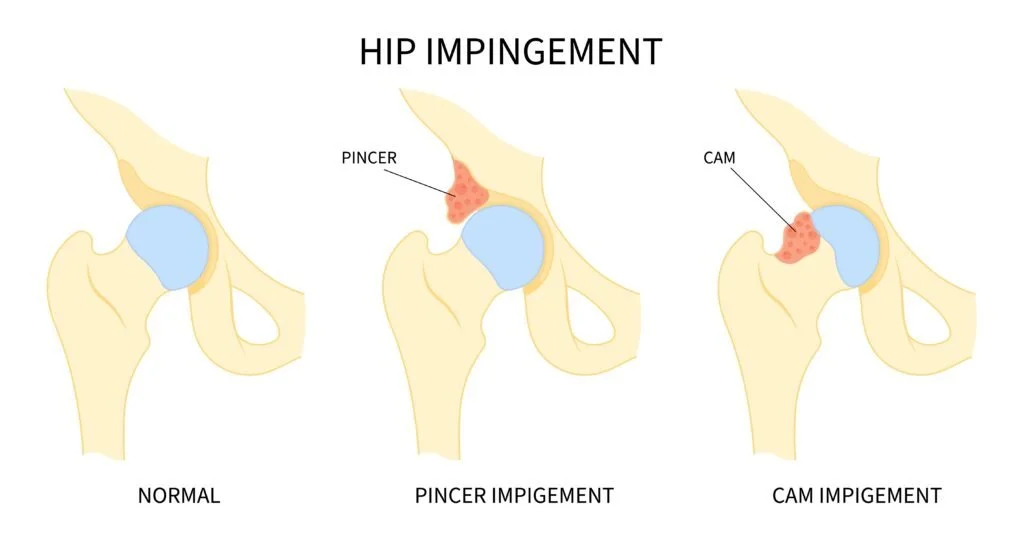
Femoroacetabular impingement (FAI) refers to the shape of the hip joint, not damage to the cartilage. The hip is a ball-and-socket joint. Normally, the ball moves smoothly within the socket during activities like walking, squatting, and running. With FAI, the shape of the ball, the socket, or both create increased contact during certain movements. There are three primary types: CAM Impingement, Pincer Impingement, and Mixed Impingement.
CAM Impingement
In this type of impingement, the ball of the hip is not perfectly round. As the hip bends, the irregular shape may contact the edge of the socket. This type is common in younger athletes.
Pincer Impingement
In this type of impingement, the socket covers too much of the femoral head. This increased coverage may cause the labrum to experience greater stress during movement.
Mixed Impingement
Many people have characteristics of both cam and pincer morphology.
What Is a Hip Labral Tear?
The labrum is a ring of cartilage surrounding the edge of the hip socket. It helps:
· Deepen the socket
· Improve stability
· Distribute forces
· Maintain joint lubrication
· Improve movement efficiency
A labral tear occurs when this cartilage becomes damaged. Unlike FAI, which describes bone shape, a labral tear describes damage to soft tissue.
How Are They Related?
Think of the labrum like the weather stripping around a door. Now imagine the door no longer closes perfectly because its hinges have shifted. Over time, the weather stripping experiences additional stress. Eventually, it may begin to wear. The same concept can occur in the hip. If the shape of the joint causes repeated contact during deep hip flexion or rotation, the labrum may gradually experience increased stress. Over months or years, this may contribute to a tear. This is why FAI and labral tears are frequently found together.
Can You Have One Without the Other?
Absolutely. Many people have:
· FAI without a labral tear
· Labral tears without FAI
· Both conditions without any pain
Research has shown that structural findings on MRI are extremely common in active adults and athletes. Finding a labral tear or FAI on imaging does not automatically explain your symptoms. This is one of the most important concepts patients should understand.
Common Symptoms of Both Conditions
Both diagnoses may produce similar symptoms, including:
· Deep groin pain
· Pain during prolonged sitting
· Pain with squatting
· Pain while pivoting
· Stiffness
· Reduced hip mobility
· Clicking or catching
· Pain after running
· Difficulty putting on shoes
Because symptoms overlap so significantly, imaging alone cannot determine which structure is responsible for your pain.
Why Some People Develop Pain—and Others Don't
One of the biggest questions patients ask is: "If my MRI shows this, why didn't it bother me before?" Pain is influenced by much more than structural changes. Several factors determine whether the hip becomes symptomatic:
· Hip strength
· Muscular endurance
· Movement quality
· Hip mobility
· Core stability
· Training volume
· Recovery
· Overall tissue capacity
Two people can have identical MRI findings while having completely different experiences. One may run marathons pain-free while the other may struggle walking around the block. The difference often lies in how well the surrounding movement system functions.
We Don't Treat MRI Reports
At True Grit Physical Therapy, we never base treatment solely on imaging findings. Instead, we ask:
· Is the labrum actually causing your symptoms?
· Is the hip joint the primary pain generator?
· Are movement impairments increasing stress on the hip?
· Is the lumbar spine contributing?
· Are surrounding muscles overloaded?
· Are strength or endurance deficits reducing your hip's ability to tolerate activity?
Answering these questions allows us to create a treatment plan that addresses the source of your symptoms—not simply the diagnosis written on the MRI report.
Our Comprehensive Evaluation
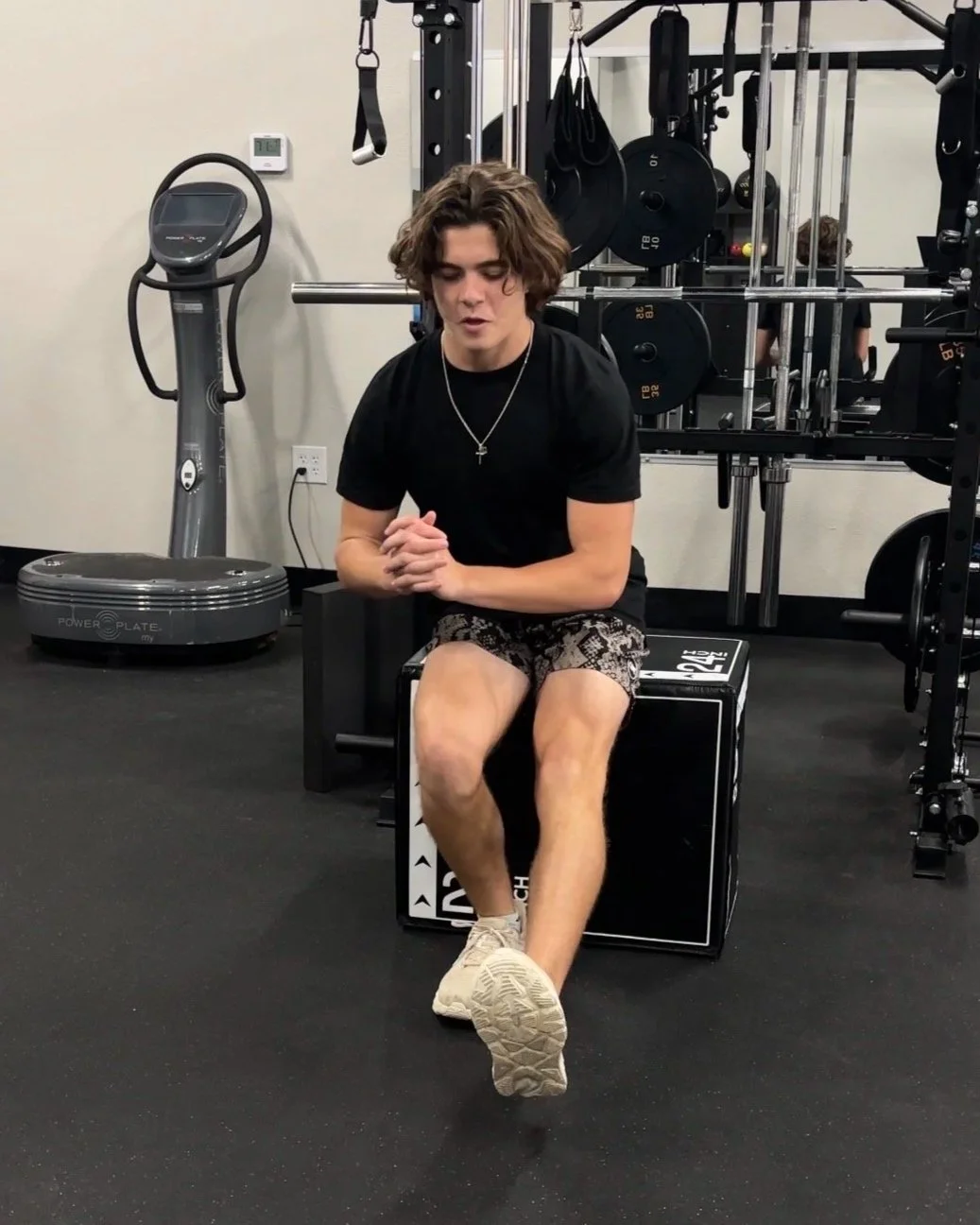
Every hip evaluation may include:
· Hip range of motion
· Hip strength testing
· Gluteal strength assessment
· Core stability testing
· Identification of movement impairments
· Single-leg balance
· Functional squat assessment
· Gait analysis
· Running assessment when appropriate
· Lumbar spine screening
· Sport-specific movement analysis
This comprehensive approach often reveals contributing factors that imaging cannot show.
How Physical Therapy Can Help
Many individuals with symptomatic FAI or labral tears improve significantly with conservative treatment. Your rehabilitation may include:
· Manual therapy
· Hip mobility exercises
· Progressive strengthening
· Gluteal strengthening
· Core stabilization
· Motor control training
· Single-leg stability training
· Running retraining
· Return-to-sport progression
· Activity modification when appropriate
Rather than simply avoiding painful activities forever, we work to improve your hip's ability to tolerate the activities you enjoy.
Does Everyone Need Surgery?
No. Many people successfully manage FAI and labral tears without surgery. Surgical consultation may be appropriate if:
· Symptoms persist despite appropriate rehabilitation
· Significant mechanical locking continues
· Daily function remains severely limited
· Large structural abnormalities exist
· Your orthopedic surgeon determines surgery is appropriate based on your clinical presentation
Even if surgery becomes necessary, physical therapy remains essential for optimizing both pre-operative function and post-operative recovery.
The Bottom Line
Hip impingement (FAI) and hip labral tears are closely related, but they describe two different problems. FAI refers to the shape of the hip bones, while a labral tear involves damage to the cartilage surrounding the hip socket. Although these conditions often occur together, neither automatically explains your pain or determines whether surgery is necessary.
At True Grit Physical Therapy, we perform a comprehensive evaluation that goes far beyond imaging. By assessing hip mobility, strength, muscular endurance, movement quality, lumbar spine function, and sport-specific demands, we identify the true contributors to your symptoms and develop an individualized treatment plan designed to help you move confidently and return to the activities you love. Because successful treatment isn't about treating an MRI. It's about understanding how your hip moves—and why it hurts.