Quick Breakdown
Hip pain is one of the most common musculoskeletal complaints, but the source isn't always the hip joint itself. Pain may originate from the joint, surrounding muscles and tendons, the lumbar spine, nerves, or even be referred from another area. At True Grit Physical Therapy, we perform a comprehensive evaluation to determine the true cause of your hip pain so treatment addresses the underlying problem—not just the symptoms.

What Causes Hip Pain?
Hip pain can make everyday activities difficult. Walking across a parking lot, getting out of your car, climbing stairs, putting on your shoes, or even sleeping comfortably can become painful.
One of the most frustrating parts of hip pain is that the source isn't always obvious. Many people assume they have arthritis or that they pulled a muscle. While those are possible causes, they are only part of the picture.
The hip is surrounded by muscles, tendons, ligaments, bursae, nerves, and the lower back. Problems in any of these structures can cause pain that feels similar.
That's why identifying the true source of your pain is the first step toward effective treatment.
Where Does Your Hip Hurt?
The location of your pain provides important clues.
Pain in the Front of the Hip or Groin
Pain deep in the groin often points to the hip joint itself. Common causes include:
Hip osteoarthritis
Femoroacetabular impingement (FAI)
Labral injuries
Hip flexor tendinopathy
Joint inflammation
You may notice pain while:
Walking
Climbing stairs
Sitting for long periods
Squatting
Pivoting
However, groin pain can also come from structures outside the hip, so a thorough evaluation is important.
Pain on the Side of the Hip
Pain on the outside of the hip is commonly caused by the gluteal tendons. This condition is known as gluteal tendinopathy.
You may notice pain when:
Lying on the affected side
Walking longer distances
Standing after sitting
Climbing stairs
Crossing your legs
Although many people call this "hip bursitis," research shows the tendons are often the primary source of pain.
Pain in the Buttock
Pain in the buttock may come from several different structures, including:
Deep hip muscles
Gluteal muscles
The sacroiliac (SI) joint
The lumbar spine
Irritated nerves
Because many structures overlap in this area, it's important to determine the true source before beginning treatment.
Hip Pain Doesn't Always Come From the Hip Joint
Many people assume hip pain means there's a problem with the hip joint. In reality, that's not always the case.
Pain can also come from:
Muscles
Tendons
The lumbar spine
Nerves
Movement problems
Training errors
Sudden increases in activity
This is one reason imaging doesn't always provide the full answer.
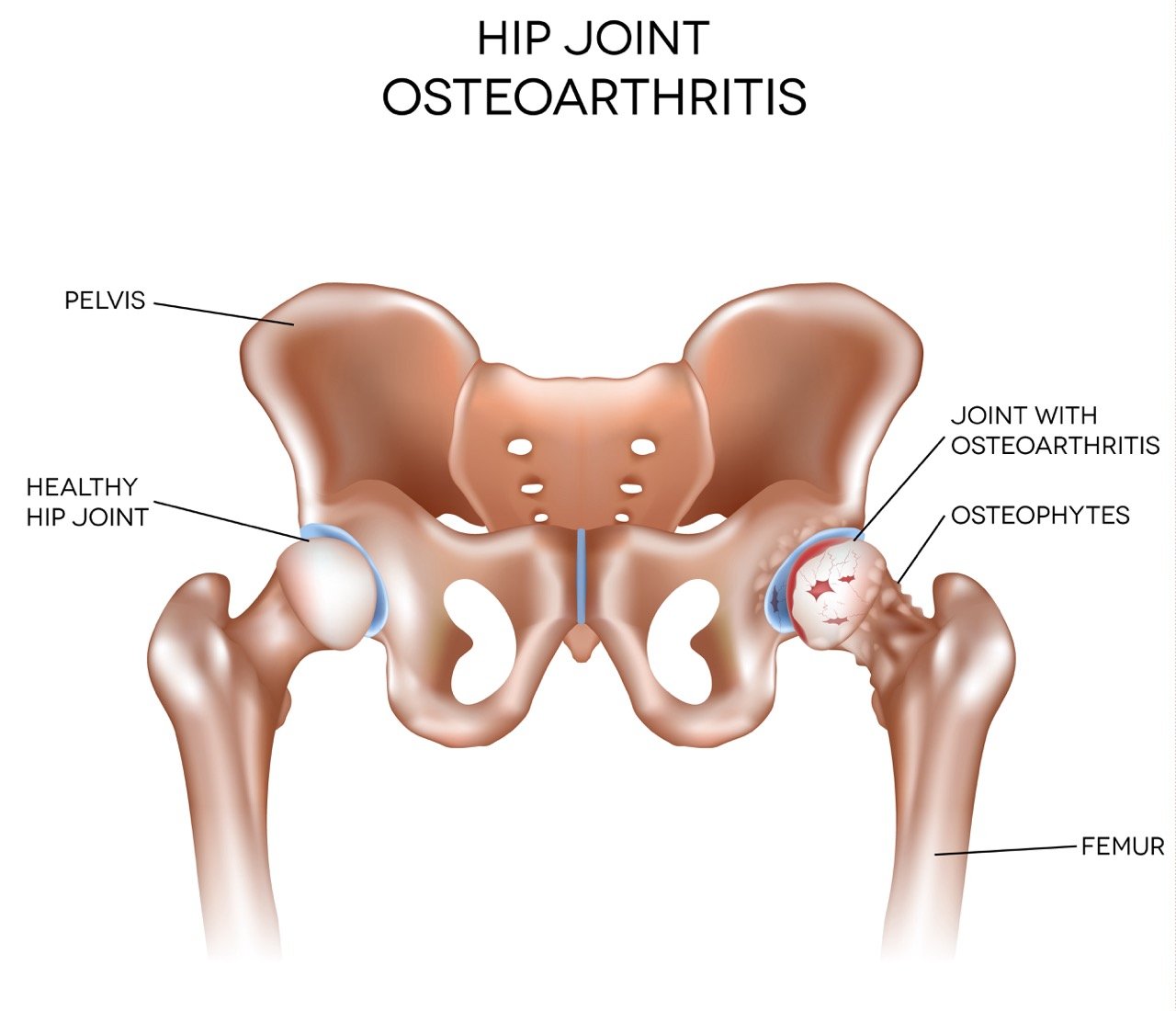
Hip Osteoarthritis
Hip osteoarthritis occurs when the cartilage within the joint gradually changes over time. Common symptoms include:
· Groin pain
· Morning stiffness
· Difficulty putting on shoes
· Pain after prolonged sitting
· Reduced hip mobility
Fortunately, many individuals with hip arthritis respond extremely well to physical therapy, strengthening, and activity modification. A diagnosis of arthritis does not automatically mean joint replacement is necessary.
Femoroacetabular Impingement (FAI)
Femoroacetabular impingement occurs when the shape of the hip joint causes increased contact between the ball and socket during certain movements. People often notice pain during:
· Deep squats
· Sitting
· Twisting
· Pivoting
· Athletic movements
Interestingly, many individuals have FAI changes on imaging without ever developing symptoms. This highlights an important principle: Imaging findings do not always equal pain.
Tendons Can Become Overloaded
The tendons surrounding the hip work constantly to stabilize your body during walking, running, and standing on one leg. When these tissues are exposed to more load than they can currently tolerate, they may become painful. Common tendon conditions include:
· Gluteal tendinopathy
· Hip flexor tendinopathy
· Proximal hamstring tendinopathy
· Adductor tendinopathy
Rather than viewing these conditions as inflammation alone, we now understand that they often represent changes in tendon capacity. Successful rehabilitation focuses on gradually improving the tendon's ability to tolerate load.
Your Back May Be the Culprit
The lumbar spine frequently refers pain into the hip region. Lower back conditions may create pain in the:
· Buttock
· Groin
· Side of the hip
· Front of the thigh
Sometimes patients are surprised to learn that their hip pain improves after treating the lumbar spine rather than the hip itself. This is one reason we routinely screen the back during every hip evaluation.
Hidden Weakness Can Contribute to Hip Pain
Many people with hip pain appear strong during everyday activities. However, testing often reveals weakness in key muscle groups.
Common findings include:
Gluteus medius weakness
Gluteus maximus weakness
Poor core stability
Reduced single-leg control
Limited muscular endurance
These deficits can increase stress on the hip over time.
Improving strength isn't just about building muscle. It's about helping your body better tolerate everyday activities and exercise.
How You Move Matters
Strength is important, but movement quality matters just as much.
During your evaluation, we assess how your body moves during activities such as:
Walking
Squatting
Lunging
Single-leg balance
Step-down testing
Running (when appropriate)
These movement assessments often reveal patterns that place unnecessary stress on the hip. Correcting those patterns can reduce pain while improving long-term function.
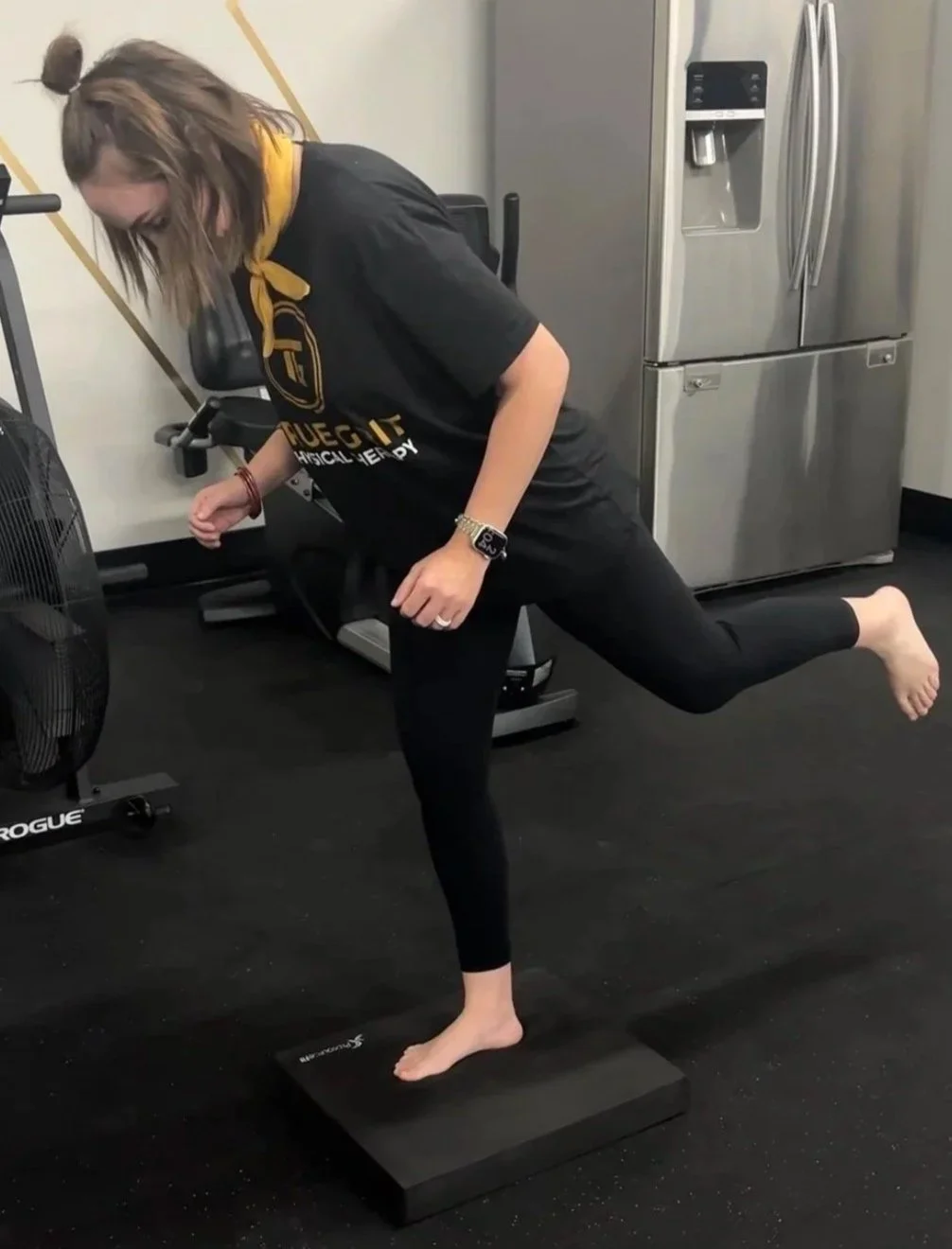
Our Evaluation Looks Beyond the Hip
At True Grit Physical Therapy, we don't just identify where your hip hurts. We determine why it hurts.
Your evaluation may include:
Hip mobility testing
Strength assessment
Muscular endurance testing
Functional movement analysis
Lumbar spine screening
Neurological testing
Gait analysis
Balance assessment
Sport-specific testing
Load tolerance evaluation
This comprehensive approach helps us identify the underlying cause of your symptoms so your treatment is tailored to your specific needs.
How Physical Therapy Can Help
Your treatment plan depends on the cause of your symptoms. It may include:
Pain Relief
Manual therapy
Mobility exercises
Building Strength
Hip strengthening
Glute strengthening
Core stabilization
Tendon loading exercises
Improving Movement
Motor control training
Walking or gait retraining
Running assessment (when appropriate)
Progressive return-to-sport programming
We'll also provide education on activity modification so you can stay active while your hip heals.
Our goal is simple: reduce pain, restore movement, and help you return to the activities you enjoy.
When Should You Seek Medical Attention?
Although most hip pain improves with conservative care, certain symptoms require prompt medical evaluation. Seek medical attention if you experience:
· Inability to bear weight after trauma
· Significant swelling
· Fever or signs of infection
· Severe night pain unrelated to movement
· Progressive weakness
· Loss of bowel or bladder control
· Persistent numbness
· Sudden inability to move the hip
These symptoms may indicate conditions requiring immediate medical attention.
The Bottom Line
Hip pain can originate from many different structures—including the hip joint, tendons, muscles, lumbar spine, or surrounding nerves. Because several conditions produce similar symptoms, accurately identifying the source is essential for successful treatment. At True Grit Physical Therapy, we perform a comprehensive evaluation that examines hip mobility, strength, muscular endurance, movement quality, lumbar spine function, and overall biomechanics. By identifying the true cause of your pain, we create an individualized treatment plan that helps you move better, hurt less, and return to the activities that matter most. Because treating hip pain starts with understanding why it's happening—not simply where it hurts.