Quick Breakdown
Groin pain can be frustrating because it may originate from many different structures—not just the muscles of the inner thigh. The source may be the hip joint, adductor muscles or tendons, hip flexors, abdominal wall, lumbar spine, nerves, or even conditions outside the musculoskeletal system. At True Grit Physical Therapy, we perform a comprehensive evaluation to determine the true cause of your groin pain so treatment targets the underlying problem rather than simply treating the symptoms.
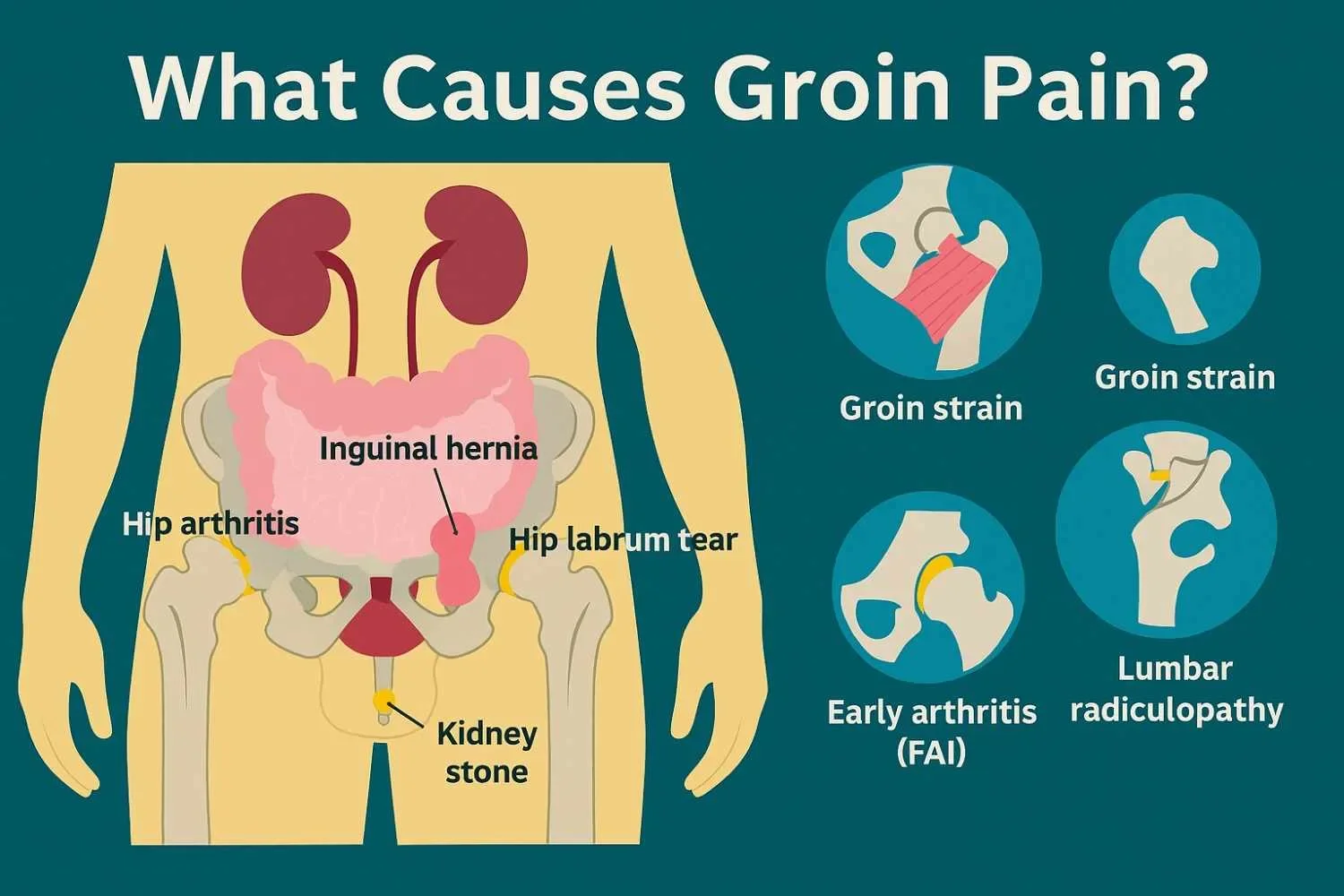
What Causes Groin Pain?
Groin pain can make simple movements feel surprisingly difficult. Walking, running, getting out of your car, climbing stairs, changing directions on the basketball court, and even coughing or rolling over in bed can become uncomfortable. One of the reasons groin pain can be so frustrating is that many different structures occupy a relatively small area.
Pain that feels almost identical may actually come from completely different tissues. That's why receiving the correct diagnosis is so important. At True Grit Physical Therapy, we don't simply ask where your pain is located. We determine why it's there.
First, Where Exactly Is the Pain?
When someone says they have groin pain, they may be describing several different locations. Pain may occur:
· Deep in the front of the hip
· Along the inner thigh
· Near the pubic bone
· Into the lower abdomen
· Near the crease of the hip
· Into the upper thigh
Each location provides important clues about which structures may be involved.
The Hip Joint Is One of the Most Common Sources
Deep groin pain often originates from the hip joint itself. Common hip-related causes include:
· Hip osteoarthritis
· Femoroacetabular impingement (FAI)
· Hip labral tears
· Joint inflammation
· Cartilage injuries
People often notice pain during:
· Walking
· Squatting
· Sitting for prolonged periods
· Getting out of a chair
· Pivoting
· Twisting
Because the hip joint commonly refers pain into the groin, many patients don't initially realize their hip is actually the source.
Adductor Strains
One of the most familiar causes of groin pain—especially in athletes—is an adductor strain. The adductor muscles run along the inside of the thigh and help bring the leg toward the body's midline. These muscles work hard during:
· Sprinting
· Cutting
· Kicking
· Skating
· Soccer
· Hockey
· Tennis
· Basketball
An adductor strain often develops suddenly during explosive movement and typically causes pain with:
· Squeezing the knees together
· Sprinting
· Changing direction
· Side-stepping
Most strains heal well, but returning too quickly can increase the risk of reinjury.
Adductor Tendinopathy
Not all adductor pain is caused by a muscle strain. Sometimes the tendon gradually becomes overloaded over weeks or months. Unlike an acute strain, adductor tendinopathy can develop slowly and may cause:
· Morning stiffness
· Pain during exercise
· Pain after activity
· Pain with prolonged running
· Tenderness near the pubic bone
Treatment focuses on gradually improving the tendon's ability to tolerate load rather than simply resting it.
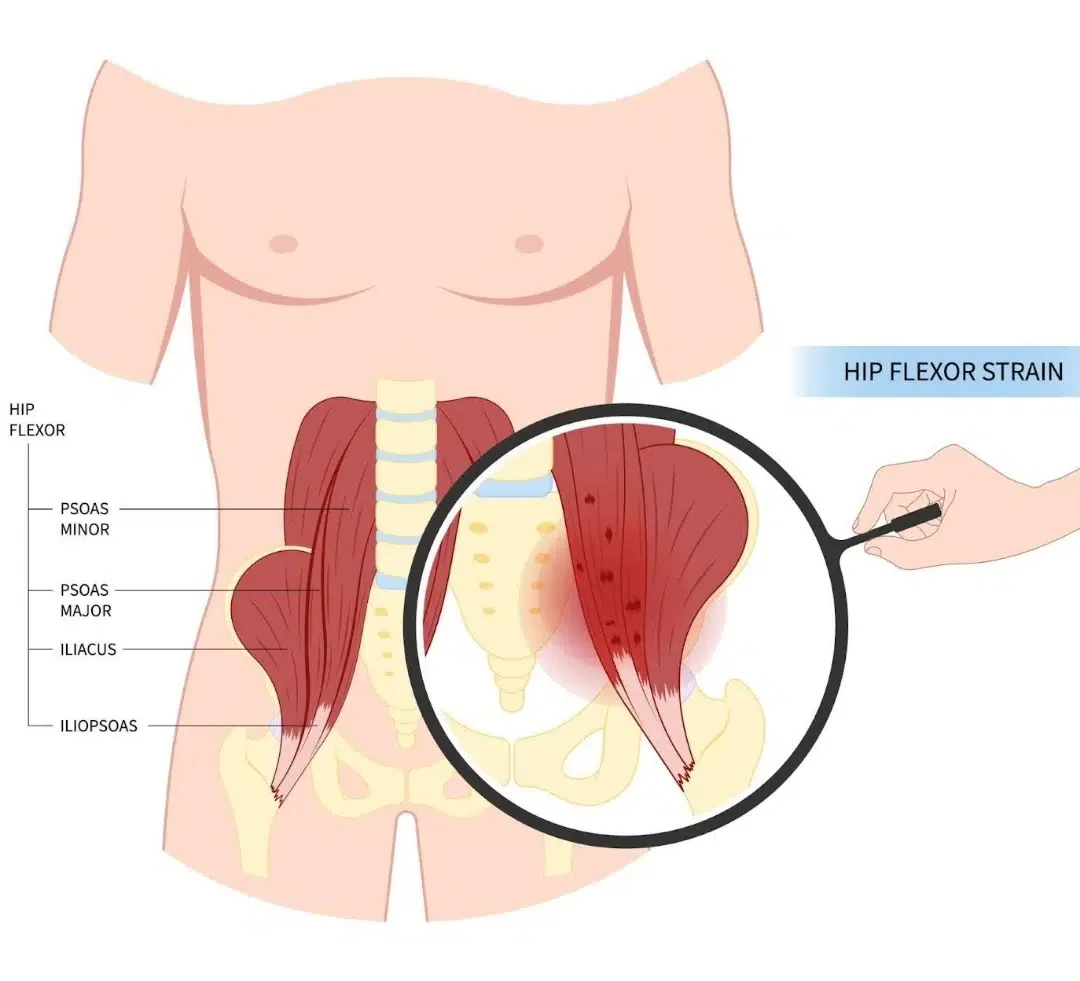
Hip Flexor Injuries
The hip flexors are another common source of groin pain. These muscles help lift the knee and stabilize the hip during walking and running. Hip flexor problems may include:
· Muscle strains
· Tendinopathy
· Muscle overload
· Reduced tissue capacity
People often notice discomfort when:
· Climbing stairs
· Lifting the knee
· Sprinting
· Rising from a chair
· Getting out of bed
Although stretching is commonly recommended, restoring strength and load tolerance is often equally important.
Athletic Pubalgia ("Sports Hernia")
Despite its name, a sports hernia is not a traditional hernia. Instead, athletic pubalgia involves injury to the soft tissues around the pubic bone and lower abdominal wall. It commonly affects athletes participating in sports requiring:
· Sprinting
· Twisting
· Cutting
· Kicking
· Rapid acceleration
Symptoms often include:
· Lower abdominal pain
· Groin pain
· Pain during coughing or sneezing
· Pain with explosive movements
Because these symptoms overlap with several other conditions, proper evaluation is essential.
Sometimes the Back Is Responsible
Many people are surprised to learn that groin pain can originate from the lumbar spine. The upper lumbar nerves supply sensation to portions of the groin and upper thigh. Conditions affecting these nerves may create pain that feels like a hip problem even when the hip itself is functioning normally. This is why we routinely examine the lumbar spine during hip and groin evaluations.
Inguinal Hernias
Not every groin problem is orthopedic. An inguinal hernia occurs when abdominal contents push through a weakened area of the abdominal wall. Common symptoms include:
· A visible bulge
· Groin discomfort
· Pain during lifting
· Pain while coughing
· Pain with straining
Unlike many musculoskeletal conditions, hernias often require medical or surgical evaluation. Recognizing when symptoms suggest a hernia is an important part of a comprehensive assessment.
Nerve-Related Groin Pain
Several nerves travel through the hip and groin region. When irritated, they may produce symptoms such as:
· Burning pain
· Tingling
· Numbness
· Sharp shooting pain
· Sensitivity to touch
Nerve-related symptoms require a different treatment approach than muscle or joint injuries.
Groin Pain Isn't Always One Structure
In many cases, multiple tissues contribute simultaneously. For example, someone with hip impingement may also develop:
· Adductor weakness
· Hip flexor overload
· Reduced core stability
· Altered movement patterns
Treating only one structure may leave the others unaddressed. This is one reason persistent groin pain often return
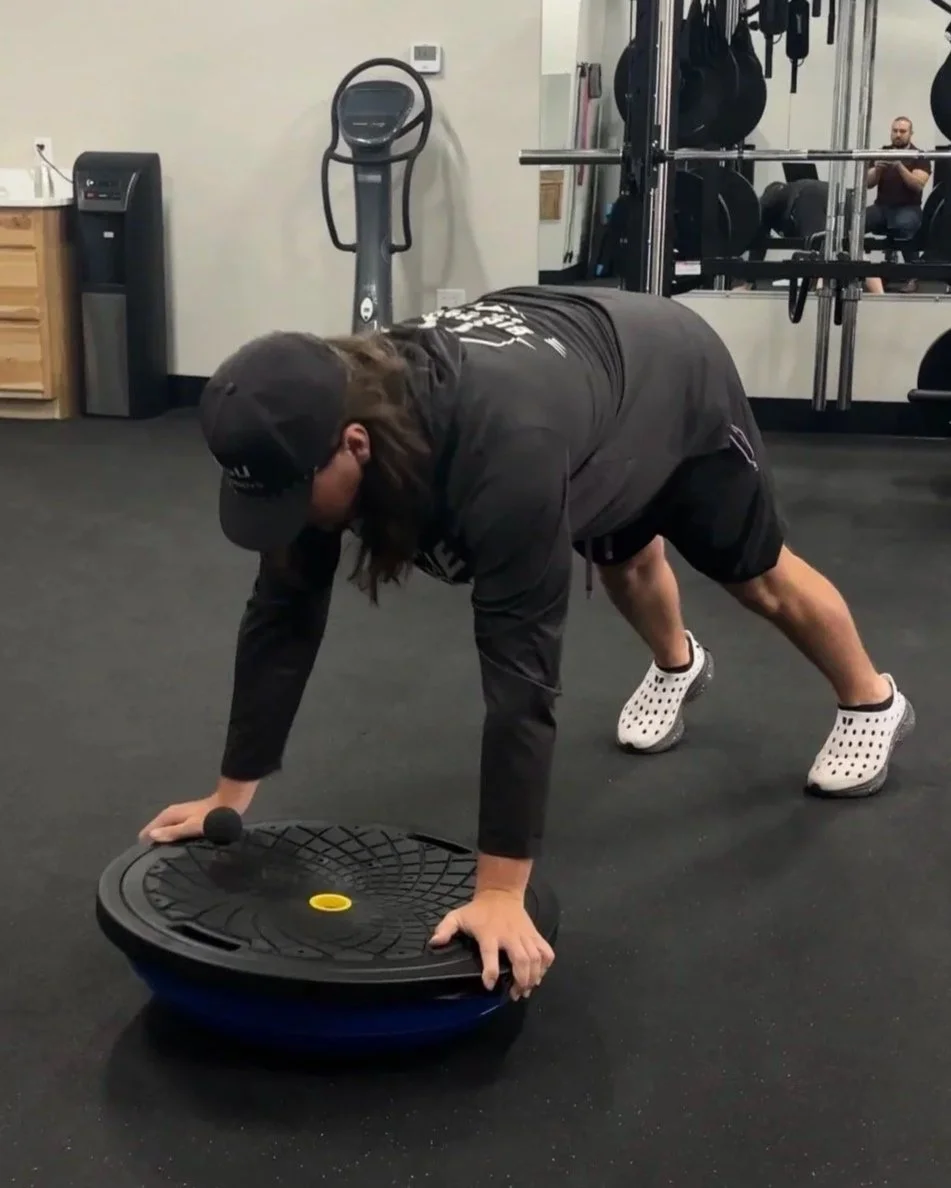
Our Evaluation Looks Beyond the Pain
At True Grit Physical Therapy, we don't assume all groin pain is the same. Our comprehensive evaluation may include:
· Hip mobility assessment
· Hip strength testing
· Adductor strength testing
· Core stability assessment
· Functional movement analysis
· Lumbar spine screening
· Neurological examination
· Gait analysis
· Running assessment when appropriate
· Sport-specific testing
By evaluating the entire movement system, we identify the underlying contributors rather than focusing solely on the painful area.
How Physical Therapy Can Help
Treatment depends on the specific diagnosis. Your rehabilitation may include:
· Manual therapy
· Progressive strengthening
· Tendon loading programs
· Hip mobility exercises
· Core stabilization
· Motor control training
· Running analysis
· Sport-specific rehabilitation
· Return-to-sport testing
· Progressive return-to-running programs
Our goal isn't simply to eliminate pain. It's to restore your ability to move confidently during everyday life and athletic performance.
The Bottom Line
Groin pain has many possible causes, including the hip joint, adductor muscles, hip flexors, abdominal wall, lumbar spine, nerves, and other medical conditions. Because many of these problems produce similar symptoms, identifying the true source requires a comprehensive evaluation. At True Grit Physical Therapy, we assess hip mobility, strength, muscular endurance, core stability, lumbar spine function, movement quality, and sport-specific demands to determine why your groin hurts. From there, we develop an individualized treatment plan designed to restore function, reduce pain, and help you return to the activities you enjoy. Because successful treatment begins with understanding what's actually causing your pain—not simply where you feel it.