Quick Breakdown
Frozen shoulder, also known as adhesive capsulitis, is a condition in which the capsule surrounding the shoulder joint becomes inflamed, thickened, and stiff. This leads to progressively worsening pain and significant loss of shoulder motion. While frozen shoulder often improves over time, recovery can take months or even years without appropriate treatment. At True Grit Physical Therapy, we perform a comprehensive evaluation to confirm the diagnosis, rule out other causes of shoulder stiffness, and develop an individualized treatment plan to restore mobility and function as efficiently as possible.

What Is Frozen Shoulder?
If your shoulder has become increasingly painful and stiff, everyday tasks can quickly become frustrating. Reaching overhead, fastening a seatbelt, putting on a coat, or washing your hair may suddenly feel difficult.
Frozen shoulder, also called adhesive capsulitis, happens when the capsule surrounding the shoulder joint becomes inflamed, thickened, and tight. As the capsule stiffens, the shoulder gradually loses motion and becomes more painful.
Unlike many other shoulder injuries, frozen shoulder limits both:
Active motion – when you move your own arm.
Passive motion – when someone else tries to move your arm.
This loss of both active and passive motion is one of the key signs that helps distinguish frozen shoulder from other shoulder conditions.
Who Is Most Likely to Develop Frozen Shoulder?
Frozen shoulder most often affects adults between 40 and 60 years old, but anyone can develop it.
Your risk is higher if you have:
Diabetes
Thyroid disease
Parkinson's disease
A previous shoulder injury
Recent shoulder surgery
Worn a sling or kept your shoulder still for a long time
Women are affected slightly more often than men. People with diabetes often experience more severe symptoms and a longer recovery.
What Causes Frozen Shoulder?
The exact cause isn't always clear.
Sometimes frozen shoulder develops without an obvious reason. This is called primary adhesive capsulitis.
Other times it develops after another shoulder problem, such as:
A rotator cuff injury
A shoulder fracture
Shoulder surgery
Wearing a sling for an extended period
Shoulder pain that limits movement
This is known as secondary adhesive capsulitis.
Regardless of how it begins, inflammation can cause the shoulder capsule to become thick, tight, and less flexible.
The Three Stages of Frozen Shoulder
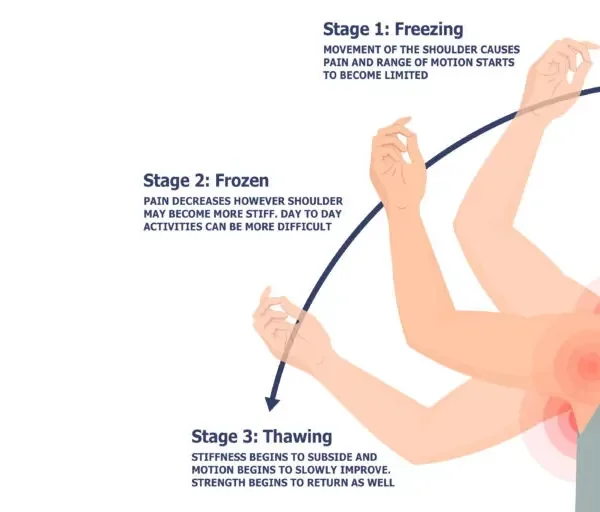
Frozen shoulder usually progresses through three stages.
Stage 1: Freezing
This is the most painful stage.
Common symptoms include:
Increasing shoulder pain
Night pain
Pain with movement
Gradually decreasing motion
Many people think they simply strained their shoulder because the stiffness develops slowly.
Typical duration: 2–9 months
Stage 2: Frozen
Pain often begins to improve, but stiffness becomes much more noticeable.
Daily activities become difficult, including:
Reaching overhead
Washing your hair
Putting on a coat
Fastening a bra
Reaching behind your back
Typical duration: 4–12 months
Stage 3: Thawing
During this stage, shoulder motion slowly returns.
Most people notice:
Less pain
Improved mobility
Better function over time
Recovery can continue for several months, and some people may have mild stiffness that gradually improves.
How Is Frozen Shoulder Different from a Rotator Cuff Injury?
These two conditions are often confused, but there is an important difference.
Rotator cuff injuries
Active movement is painful or weak.
Passive movement is often close to normal.
Frozen shoulder
Active movement is limited.
Passive movement is also limited.
If someone else tries to move your shoulder, it still feels stiff. This is one of the biggest clues that frozen shoulder is the cause.
Imaging Doesn't Always Diagnose Frozen Shoulder
Not always.
X-rays are usually normal.
An MRI may show changes in the shoulder capsule, but imaging is often used to rule out other conditions, such as:
Rotator cuff tears
Arthritis
Labral injuries
Fractures
Frozen shoulder is usually diagnosed through your medical history and physical examination.
Our Evaluation Looks Beyond the Diagnosis
Not every stiff shoulder is frozen shoulder.
At True Grit Physical Therapy, your evaluation may include:
Active range of motion
Passive range of motion
Shoulder strength testing
Rotator cuff assessment
Scapular movement evaluation
Neck (cervical spine) screening
Functional movement assessment
Medical history review
Special tests to rule out other conditions
This helps us determine whether frozen shoulder is truly the cause of your symptoms.
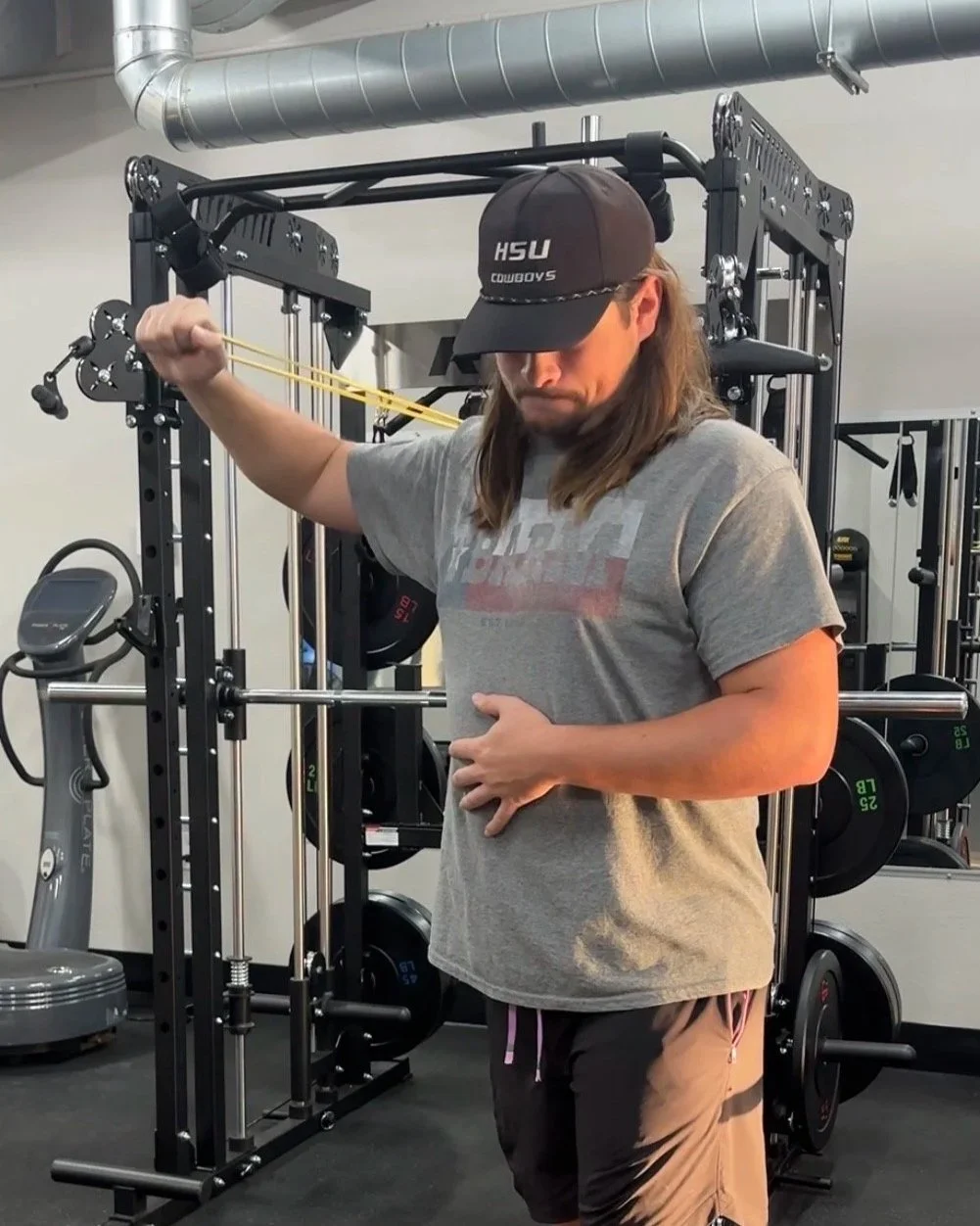
How Physical Therapy Can Help
Treatment depends on which stage of frozen shoulder you're experiencing.
Your rehabilitation may include:
Reduce Pain
Gentle joint mobilization
Manual therapy
Pain management strategies
Restore Motion
Range-of-motion exercises
Gentle stretching
Home exercise program
Rebuild Strength
Progressive strengthening
Scapular stabilization
Activity modification
Every treatment plan is tailored to your symptoms, mobility, and goals.
Should You Push Through the Pain?
Many people believe they need to stretch as hard as possible to "break up the scar tissue."
In reality, that isn't always the best approach.
The right treatment depends on which stage of frozen shoulder you're in.
During the Freezing Stage
The shoulder is inflamed and very sensitive.
Treatment focuses on:
Managing pain
Maintaining as much motion as possible
Gentle mobility exercises
Manual therapy within your tolerance
Keeping the shoulder moving without increasing irritation
The goal is to stay mobile—not force movement.
During the Frozen Stage
Pain usually improves, but stiffness becomes the biggest problem.
Treatment often includes:
Joint mobilization
Progressive stretching
Improving shoulder mechanics
Restoring normal movement
Maintaining strength
Steady progress is more important than trying to force quick gains.
During the Thawing Stage
As motion returns, treatment shifts toward rebuilding strength and function.
Your program may include:
Progressive strengthening
Rotator cuff exercises
Scapular stabilization
Functional movement training
Return-to-work or return-to-sport activities
This stage focuses on helping you regain confidence using your shoulder again.
Why Stage-Specific Treatment Matters
Frozen shoulder doesn't respond well to a one-size-fits-all treatment plan.
A shoulder that's inflamed needs a different approach than one that's simply stiff.
At True Grit Physical Therapy, we adjust your treatment based on:
Your stage of recovery
Pain level
Shoulder mobility
Functional limitations
Personal goals
The fastest recovery isn't always the most aggressive one. It's the treatment that's right for your shoulder today.
The Bottom Line
Frozen shoulder is a condition in which the shoulder capsule becomes inflamed, thickened, and stiff, leading to progressive pain and loss of shoulder motion. Although it often improves over time, recovery can be lengthy without appropriate treatment. At True Grit Physical Therapy, we perform a comprehensive evaluation to distinguish frozen shoulder from other causes of shoulder pain and stiffness. By assessing shoulder mobility, strength, scapular mechanics, cervical spine function, and overall movement quality, we create an individualized rehabilitation plan that helps restore motion, improve function, and guide you through each stage of recovery. Because the goal isn't simply to wait for your shoulder to "thaw." It's to help you regain the mobility and confidence to return to everyday life as efficiently and safely as possible.