Why Does My Jaw Click or Pop?
Quick Breakdown
A clicking or popping jaw is surprisingly common and doesn't always indicate a serious problem. In many cases, the sound comes from the small cartilage disc within the jaw joint moving slightly out of position before returning to its normal location during movement. At True Grit Physical Therapy, we evaluate whether your jaw clicking is simply a harmless finding or a sign of an underlying movement problem that may benefit from treatment.

Why Does My Jaw Click or Pop?
Have you ever opened your mouth to yawn, take a bite of food, or simply talk and noticed a click or pop coming from your jaw? If so, you're not alone. Jaw clicking is one of the most common complaints associated with the temporomandibular joint (TMJ). For some people, it's an occasional noise that never causes pain. For others, it's accompanied by discomfort, stiffness, headaches, or even episodes where the jaw feels like it gets "stuck."
The first thing to know is this: A clicking jaw doesn't automatically mean something is wrong. The second thing to know is equally important: If that clicking is accompanied by pain, locking, or difficulty moving your jaw, it's worth having it evaluated. Understanding why your jaw clicks is the first step toward determining whether treatment is needed.
How the Jaw Normally Works
The temporomandibular joint is one of the most complex joints in the body. Unlike a simple hinge, it both rotates and glides every time you open your mouth. Between the jawbone (mandible) and the skull sits a small piece of cartilage called the articular disc. Think of this disc as a cushion. It helps distribute forces across the joint and allows the jaw to move smoothly during talking, chewing, yawning, and swallowing. Ideally, the disc stays centered between the two bones throughout the movement. When it does, jaw movement is typically smooth and quiet.
Why Does the Jaw Click?
One of the most common causes of jaw clicking is called disc displacement with reduction. In simple terms, the cartilage disc sits slightly forward of its ideal position when
the mouth is closed. As you begin opening your mouth, the jawbone catches up to the disc, creating the familiar click or pop as the disc slips back into place. When you close your mouth, the disc may move forward again, sometimes producing a second click. This is why some people notice:
· A click when opening
· A click when closing
· Or both
While the name sounds intimidating, many people with disc displacement continue to function normally for years without significant pain or limitation.
Does Every Clicking Jaw Need Treatment?
No. This is one of the biggest misconceptions surrounding TMJ dysfunction. Research has shown that many people have jaw clicking without pain or functional limitations. If your jaw:
· Opens normally
· Doesn't hurt
· Doesn't lock
· Doesn't interfere with eating or talking
…the clicking itself may simply represent a variation in how your joint moves rather than a condition requiring treatment. In these cases, treating the sound alone is often unnecessary. Our goal is always to improve function—not simply eliminate noise.

When Clicking Becomes a Problem
Jaw clicking deserves closer evaluation when it's accompanied by symptoms such as:
· Jaw pain
· Facial pain
· Difficulty chewing
· Limited mouth opening
· Episodes of locking
· Headaches
· Ear pain or fullness
· Neck pain
· Increasing frequency or severity of symptoms
These additional findings suggest the clicking may be part of a larger temporomandibular disorder (TMD) rather than simply an incidental finding.
It's Not Always the Disc
Although disc movement is the most common explanation, jaw clicking isn't always caused by the disc itself. Other possible contributors include:
· Muscle tension
· Joint hypermobility
· Arthritis
· Joint inflammation
· Previous trauma
· Altered movement patterns
· Ligament laxity
This is why a proper evaluation is important. The same sound may have different causes in different individuals.
The Jaw Doesn't Work Alone
One of the biggest mistakes in treating TMJ dysfunction is focusing only on the jaw. The jaw is closely connected to the:
· Cervical spine
· Neck muscles
· Upper back
· Head posture
· Facial muscles
· Nervous system
Restrictions or dysfunction in one area often influence the others. For example, poor cervical mobility or forward head posture may alter the way the jaw moves during everyday activities. Likewise, excessive jaw muscle tension may contribute to headaches and neck pain. The entire system must be evaluated.
Everyday Habits Can Contribute
Many people unknowingly overload their jaw throughout the day. Common contributing habits include:
· Clenching during stressful situations
· Grinding the teeth at night
· Frequent gum chewing
· Nail biting
· Biting pens or pencils
· Resting your chin in your hand
· Holding tension in the jaw while concentrating
These habits may increase muscle activity and joint loading over time, contributing to irritation even if they aren't the original cause of the clicking.
Our Evaluation Goes Beyond the Click
At True Grit Physical Therapy, we don't simply listen for the sound. We evaluate how the entire jaw and surrounding movement system functions. Your examination may include:
· Measurement of jaw opening
· Assessment of jaw movement patterns
· Evaluation of joint mobility
· Palpation of the muscles of mastication
· Cervical spine mobility assessment
· Postural evaluation
· Muscle strength and endurance testing
· Observation of chewing mechanics
· Screening for clenching and grinding habits
Most importantly, we determine whether the clicking is simply a mechanical finding or whether it is contributing to your pain and limitations.
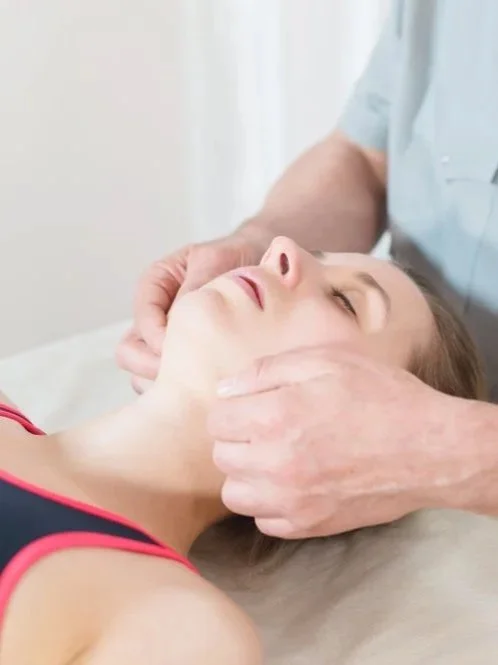
How Physical Therapy Can Help
If your jaw clicking is associated with pain or movement dysfunction, physical therapy may help improve the way your jaw functions. Treatment is individualized and may include:
· Manual therapy for the TMJ
· Cervical spine manual therapy
· Soft tissue mobilization
· Myofascial release of the jaw and facial muscles
· Jaw mobility exercises
· Motor control exercises
· Deep neck flexor strengthening
· Postural retraining
· Education regarding jaw habits
· Progressive return to normal jaw function
The goal isn't simply to stop the clicking. It's to reduce pain, restore comfortable movement, and improve the way the jaw functions throughout everyday life. Interestingly,
many people continue to have a painless click even after their symptoms have completely resolved. That's perfectly acceptable if the joint is functioning normally.
When Should You Seek Further Evaluation?
Although most jaw clicking is not dangerous, certain symptoms deserve prompt medical attention. Seek further evaluation if you experience:
· Sudden inability to open or close your mouth
· Significant jaw trauma
· Rapid swelling
· Fever or signs of infection
· Progressive facial numbness
· Severe jaw pain that continues worsening
· Persistent locking that prevents normal eating or speaking
These symptoms may indicate conditions requiring additional medical evaluation.
The Bottom Line
Jaw clicking is common. In many people, it's simply the sound of a cartilage disc moving during jaw motion and doesn't require treatment. However, when clicking is accompanied by pain, headaches, locking, difficulty chewing, or reduced jaw movement, it may indicate an underlying temporomandibular disorder that deserves a comprehensive evaluation. At True Grit Physical Therapy, we evaluate not only the jaw joint itself, but also the muscles, cervical spine, posture, and movement patterns that influence how the entire system works. By identifying the true cause of your symptoms, we can develop a personalized treatment plan that restores comfortable movement and helps you return to eating, talking, laughing, and living without pain. Because our goal isn't simply to make your jaw quieter. It's to help it function better.