Shin Splints vs. Stress Fractures: How Do You Tell the Difference?
Quick Breakdown
Pain along the shin is one of the most common injuries among runners, athletes, and military recruits—but not all shin pain is the same. Two of the most common causes are medial tibial stress syndrome (shin splints) and tibial stress fractures, and while they may begin with similar symptoms, they require very different treatment approaches. At True Grit Physical Therapy, our comprehensive evaluation helps determine the source of your pain so we can safely guide your recovery while identifying those who need further imaging or medical evaluation.

Shin Splints vs. Stress Fractures: How Do You Tell the Difference?
If you've ever developed pain along the inside of your shin while running, jumping, or increasing your training, you've probably wondered: "Is it just shin splints, or is it something more serious?"
It's one of the most common questions we hear from runners and athletes. Both shin splints and stress fractures develop from repetitive loading of the leg. Both often occur after increasing mileage, changing training intensity, or returning to activity too quickly. Both can make running painful and may force you to cut your workouts short.
Despite these similarities, they are very different injuries. Understanding the difference is critical because continuing to train through a stress fracture can lead to a more serious injury, while most cases of shin splints respond very well to conservative treatment and a gradual return to activity.
What Are Shin Splints?
The medical term for shin splints is medial tibial stress syndrome (MTSS).
Rather than representing one specific injury, shin splints are considered an overuse injury caused by repeated stress on the tissues attached to the inside border of the tibia (shin bone). These tissues include muscles, fascia, and the outer lining of the bone (the periosteum). As repetitive forces accumulate, the tissues become irritated and painful. Shin splints commonly develop after:
· Increasing running mileage too quickly
· Adding speed work or hill training
· Beginning a new running program
· Returning to running after time off
· High volumes of jumping activities
· Military or tactical training
What Is a Stress Fracture?
A stress fracture is different. Instead of irritation of the soft tissues surrounding the bone, a stress fracture is a small crack within the bone itself that develops when repetitive loading exceeds the bone's ability to repair and remodel. Bone is constantly adapting to the forces placed upon it. When training progresses appropriately, bone becomes stronger. When loading increases faster than the bone can adapt—or recovery is inadequate—tiny areas of bone damage begin to accumulate. If that process continues unchecked, a stress reaction can progress into a stress fracture.

Why Do These Injuries Happen?
Although the tissues involved are different, both injuries often share many of the same underlying contributors. Common risk factors include:
· Rapid increases in training volume
· Sudden increases in running intensity
· Poor recovery between workouts
· Muscle weakness
· Movement impairments
· Running through persistent pain
· Previous lower extremity injuries
· Low energy availability or inadequate nutrition
· Inappropriate progression after returning from injury
This is why simply resting until the pain improves often isn't enough. Unless the underlying contributors are addressed, the injury frequently returns.
Common Symptoms of Shin Splints
Shin splints usually cause:
· Aching pain along the inside of the shin
· Tenderness spread over several inches of the bone
· Pain that develops early in a run but sometimes improves as the body warms up
· Symptoms that return after activity
· Mild discomfort when walking
· Pain that is usually related to activity rather than present at complete rest
Many runners can continue training through the early stages, although doing so often allows the condition to worsen over time.
Common Symptoms of a Stress Fracture
Stress fractures often present differently. Common signs include:
· Pain in one very specific location on the bone
· Sharp, localized tenderness
· Pain that worsens with impact activities
· Pain that begins earlier during exercise and becomes progressively worse
· Pain while walking
· Pain that may persist even after activity stops
· Night pain or pain at rest in more advanced cases
· Difficulty hopping on the affected leg
Unlike shin splints, stress fracture pain usually becomes progressively more consistent as the injury advances.
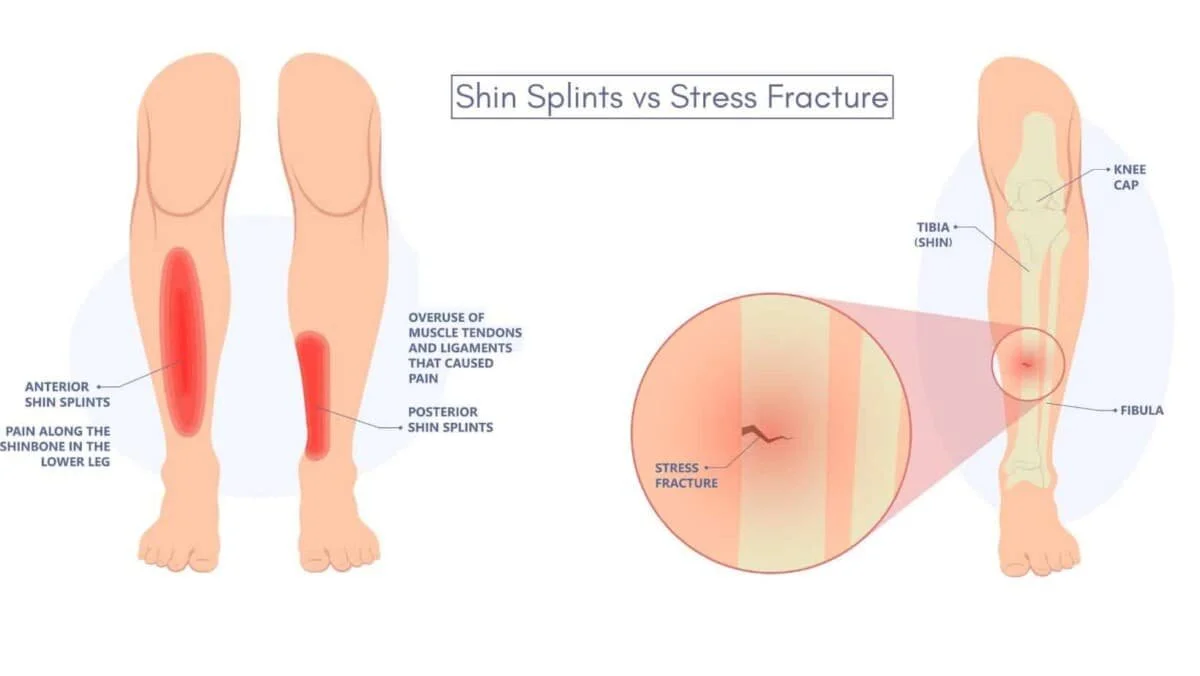
Comparing the Two
Although every athlete is different, there are several characteristics that commonly help distinguish these injuries.
Shin Splints Often Look Like This:
· Pain spread over a broader area along the inside of the shin
· Dull, aching discomfort
· Pain improves after warming up (especially early on)
· Tenderness extends over several centimeters
· Symptoms usually improve with rest
Stress Fractures Often Look Like This:
· Pain located at one small, specific point
· Sharp or deep aching pain
· Pain worsens with every impact
· Pain may occur during walking or daily activities
· Symptoms continue to worsen if activity continues
· Hopping is often very painful
These patterns are helpful—but they are not enough to make a diagnosis on their own. That's why a thorough evaluation is essential.
How We Differentiate Between the Two
At True Grit Physical Therapy, we begin by understanding exactly how your symptoms developed. We want to know:
· When did the pain begin?
· Did your training recently change?
· Does the pain improve as you warm up?
· Does it continue hurting after the run?
· Does walking hurt?
· Can you hop on the affected leg?
We then perform a comprehensive physical examination that may include:
· Palpation to determine whether tenderness is diffuse or highly localized
· Walking and running assessment
· Single-leg hopping tests
· Functional loading tests
· Strength testing of the hips, calves, and foot muscles
· Mobility assessment
· Balance testing
· Evaluation of training history and recent workload changes
One of the biggest differences we assess is how the bone responds to loading. Stress fractures typically become increasingly painful with impact and often produce very localized tenderness, whereas shin splints tend to involve a broader region of irritation and are often more closely related to repetitive muscular traction along the tibia.
Looking Beyond the Pain
One of the biggest mistakes in treating shin injuries is focusing only on the painful area. The real question is: "Why did the tissue become overloaded in the first place?"
Our evaluation looks for the movement impairments and strength deficits that may be contributing to excessive stress on the lower leg. Common findings include:
· Weak gluteal muscles reducing control of the lower extremity
· Calf weakness limiting force absorption
· Poor single-leg balance
· Limited ankle mobility
· Decreased foot stability
· Excessive pelvic drop during running
· Dynamic knee valgus
· Running mechanics that increase loading on the tibia
These factors don't necessarily cause the injury by themselves. Instead, they influence how forces are distributed throughout the body during thousands of running strides.
When Imaging May Be Needed
Most cases of shin splints can be diagnosed through a thorough history and physical examination. However, if our evaluation suggests the possibility of a stress fracture, additional imaging may be recommended. Early stress fractures may not appear on standard X-rays, especially during the first few weeks after symptoms begin. When clinical suspicion remains high, advanced imaging such as an MRI may be appropriate because it can identify bone stress injuries earlier and more accurately. Recognizing when further evaluation is necessary is an important part of providing safe and effective care.
How Physical Therapy Helps
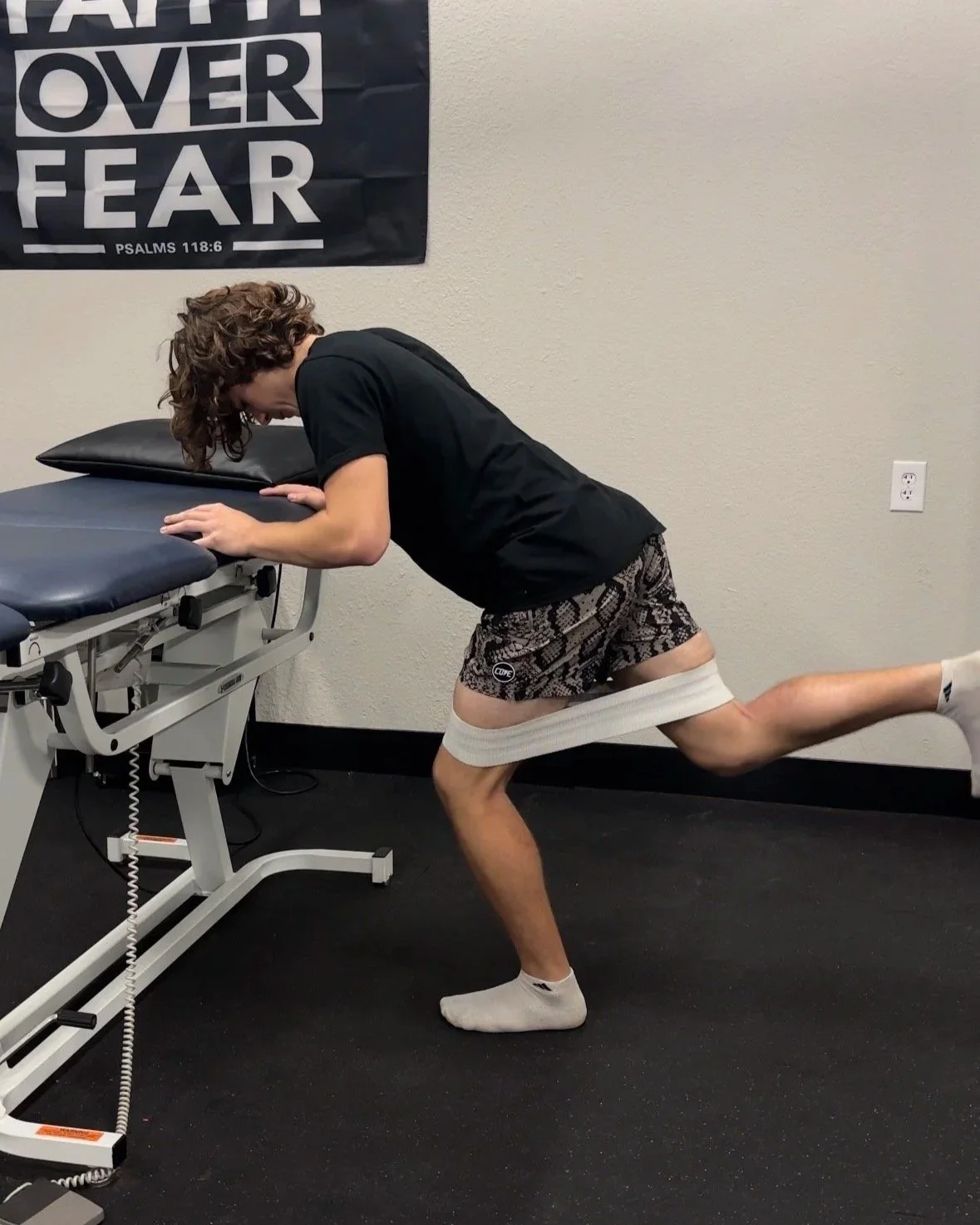
Whether your diagnosis is shin splints or you're recovering from a stress fracture after appropriate medical management, physical therapy addresses much more than pain. Treatment may include:
· Progressive strengthening of the hips, calves, and lower extremities
· Balance and neuromuscular training
· Manual therapy to improve mobility where appropriate
· Running gait analysis
· Gradual return-to-running progressions
· Load management strategies
· Education on recovery and training progression
Our goal isn't simply to get you back to running. It's to reduce the likelihood that you'll be dealing with the same injury again a few months later.
The Bottom Line
Shin splints and stress fractures often begin with similar symptoms, but they represent different stages of tissue overload and require different treatment strategies. A careful evaluation can help determine whether you're dealing with irritation of the soft tissues surrounding the tibia or an injury to the bone itself.
At True Grit Physical Therapy, we combine movement analysis, strength testing, running evaluation, and evidence-based clinical examination to identify the true source of your pain. From there, we build an individualized rehabilitation plan that not only helps you recover but also addresses the factors that contributed to the injury in the first place—so you can return to running stronger, more confident, and better prepared for the miles ahead.