Why Do Runners Keep Getting Injured?
Quick Breakdown
Running injuries rarely happen because of one bad step—they're usually the result of thousands of small stresses accumulating over time. Subtle movement impairments, strength deficits, muscle imbalances, training errors, and inadequate recovery can all contribute to repeated overload of the same tissues. At True Grit Physical Therapy, we evaluate how your entire body moves to identify the underlying causes of injury so you can run farther, faster, and with greater confidence.

Why Do Runners Keep Getting Injured?
Whether you're training for your first 5K, preparing for a marathon, or simply enjoy running to stay healthy, there's one question nearly every runner asks at some point: "Why do I keep getting injured?"
Maybe it's your knee. Maybe your Achilles tendon. Your plantar fascia. Your hip. Your shin. Or maybe every time one injury improves, another seems to appear.
If this sounds familiar, you're not alone. Running is a great form of exercise, but it also places repetitive demands on the body. With every stride, your legs absorb forces that can be two to three times your body weight. Multiply that by several thousand steps during a single run, and it's easy to see why even small problems can become big ones over time.
The good news? Most running injuries are preventable when the underlying causes are identified and addressed.
Running Is a Repetition Sport
One of the most important concepts in understanding running injuries is this: Your body doesn't care how small a movement error is—it cares how many times you repeat it. Shirley Sahrmann's work on movement system impairments emphasizes that repeated movement patterns can gradually overload tissues long before pain develops.
A slight inward collapse of the knee.
A pelvis that drops a few degrees with every step.
A hip that doesn't extend as it should.
An ankle that lacks mobility.
None of these movement impairments may cause pain during one stride. But what about after 5,000 strides? Or 20 miles this week? Or several hundred miles over the course of a training cycle?
Those subtle movement impairments become repeated microtrauma. Instead of distributing forces efficiently throughout the body, certain joints, muscles, tendons, and bones absorb more stress than they were designed to tolerate. Eventually, the tissue's ability to recover can no longer keep up with the stress being placed upon it. Then, pain develops.
Small Movement Problems Become Big Problems
Many runners believe injuries happen because something suddenly "gave out." More often, the injury has been developing for weeks—or even months. Examples include:
· A runner with limited hip extension begins compensating through the lumbar spine.
· Weak hip muscles allow the knee to drift inward during every landing.
· Poor trunk control increases rotational stress throughout the lower extremity.
· Limited ankle mobility changes how forces are absorbed at the foot and knee.
· Poor single-leg stability increases stress on the Achilles tendon and plantar fascia.
Each individual compensation may seem insignificant. But running is a sport built on repetition. Those compensations can occur thousands of times during every run.
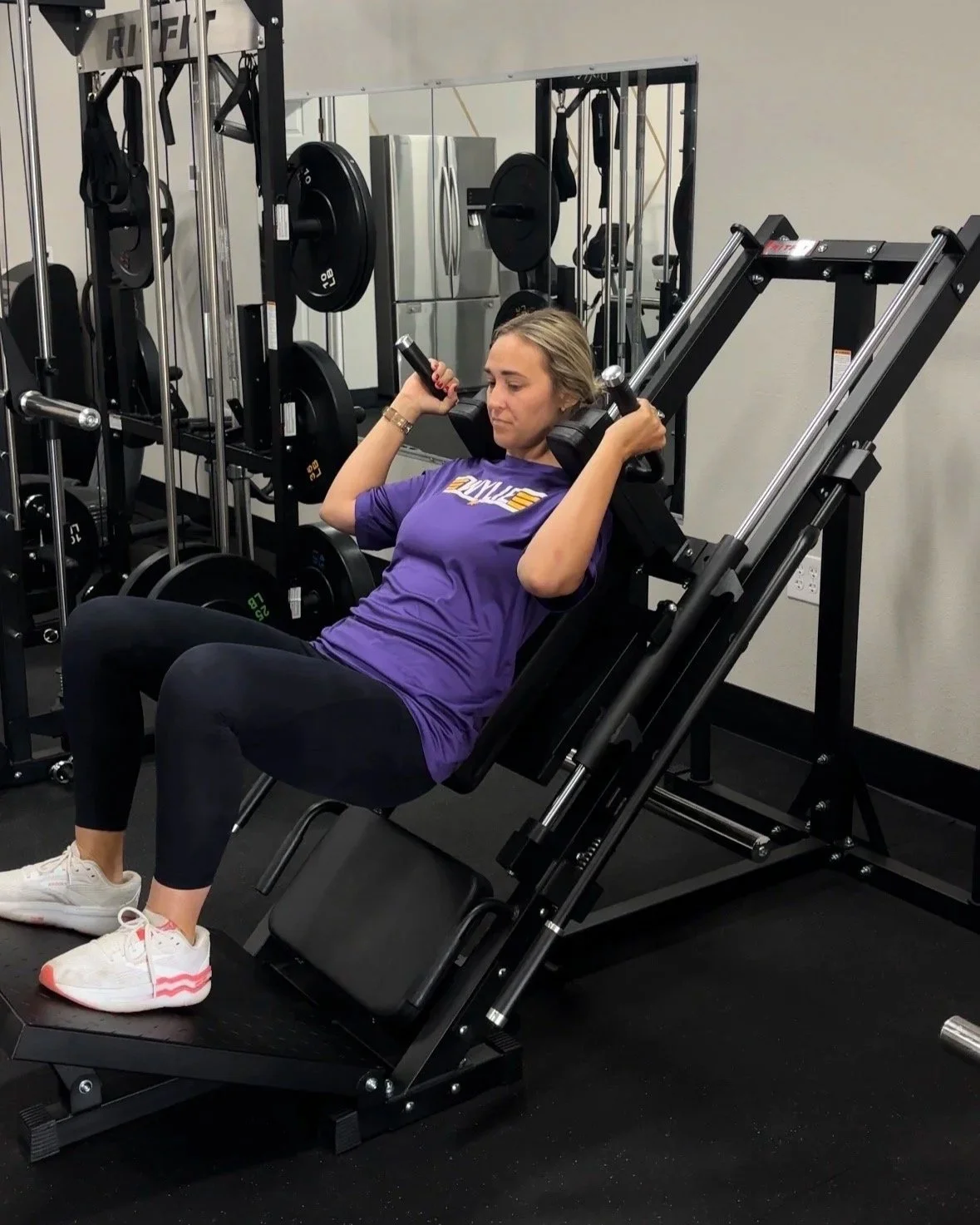
Strength Training Is One of the Best Injury Prevention Tools
One of the biggest misconceptions in the running community is that running alone is enough to prepare your body for running. It isn't.
Running builds endurance exceptionally well, but it does not consistently build the strength needed to tolerate increasing training loads. Research and leading running experts—including educators involved with RunDNA—continue to emphasize the importance of strength training for injury prevention and performance.
Strong runners are often more resilient runners. Strength training improves your body's ability to:
· Absorb impact forces
· Control landing mechanics
· Maintain efficient running form as fatigue develops
· Reduce excessive stress on joints and tendons
· Produce more force with less effort
In other words, a stronger body is often a more durable body.
Muscle Imbalances Can Change How You Run
Running requires every major muscle group to work together. When one muscle isn't contributing appropriately, another often has to compensate. Some of the most common deficits we identify include:
· Weak gluteus medius contributing to excessive hip and knee motion
· Poor gluteus maximus strength limiting hip extension
· Calf weakness reducing push-off efficiency
· Decreased trunk and core stability
· Hip flexor tightness limiting stride mechanics
· Weak foot intrinsic muscles reducing stability during stance
These aren't simply "weak muscles." They influence how your body moves with every step. Improving strength without improving movement quality isn't enough—and improving movement without adequate strength isn't enough either. The two work together.
Training Errors Matter, Too
Even runners with excellent mechanics can become injured if training progresses faster than their body can adapt. One of the biggest contributors to running injuries isn't poor running form—it's excessive training load. Common training mistakes include:
· Increasing weekly mileage too quickly
· Adding speed work too aggressively
· Running every workout at the same moderate-hard pace
· Skipping recovery days
· Returning too quickly after an injury
· Ignoring early warning signs of soreness
Your body needs time to adapt to the stress you're placing on it. Fitness improves during recovery—not just during the workout itself. Balancing training stress with adequate recovery is essential for staying healthy.
Recovery Is Part of Training
Many runners focus heavily on mileage but underestimate recovery. Sleep, nutrition, hydration, and recovery days all influence how well your tissues repair between runs. Without adequate recovery, even perfect running mechanics cannot overcome accumulated fatigue. Recovery allows your muscles, tendons, bones, and nervous system to adapt to training. It's not a sign of weakness. It's part of becoming a stronger runner.

Shoes Matter—But Not as Much as Many People Think
One of the first things injured runners often ask is: "Do I need different shoes?" Footwear certainly plays a role in comfort and can influence how forces are distributed throughout the body. However, shoes rarely fix the underlying problem.
If movement impairments, strength deficits, or training errors remain unaddressed, simply changing shoes is unlikely to provide a long-term solution. The best shoe is often the one that feels comfortable, matches your running style, and supports your training—not necessarily the most expensive model or the latest trend.
Every Runner Is Different
There is no single "perfect" running form. Running mechanics vary based on anatomy, mobility, experience, speed, training history, and individual goals. Rather than trying to make every runner look identical, our goal is to identify movement patterns that may be contributing to excessive stress and determine whether improving those patterns could reduce injury risk.
For some runners, small adjustments in cadence or posture may help. For others, improving hip strength or ankle mobility may have a much greater impact. The right answer depends on the individual—not a generic checklist.
How We Evaluate Running Injuries
At True Grit Physical Therapy, we don't simply treat the painful area. We evaluate the entire movement system to understand why that tissue became overloaded in the first place. Depending on your injury and goals, your evaluation may include:
· A detailed training history
· Running gait analysis
· Strength testing
· Mobility assessment
· Single-leg balance and stability testing
· Functional movement assessment
· Landing and hopping mechanics
· Cadence and stride evaluation
· Assessment of previous injuries and training habits
This comprehensive approach allows us to identify the factors contributing to your injury and develop a treatment plan specific to your body and your goals.
Our Goal Is to Keep You Running
Our goal isn't simply to get you through your current injury. It's to help you become a stronger, more efficient, and more resilient runner. By identifying movement impairments, correcting muscle imbalances, improving strength, optimizing training habits, and addressing the small problems before they become big ones, we help reduce the cycle of recurring injuries.
Because the best running plan isn't just one that gets you to the finish line. It's one that keeps you healthy enough to enjoy running for years to come. If you're tired of dealing with recurring injuries, we'd love to help you discover why they keep happening—and develop a plan that gets you back on the road, trail, or track with confidence.