Herniated Disc vs. Muscle Strain: How Do You Know What's Causing Your Low Back Pain?
Quick Breakdown
Not all low back pain is the same. While a herniated disc and a muscle strain can both cause significant discomfort, they often produce very different symptoms and require different treatment approaches. At True Grit Physical Therapy, our comprehensive evaluation helps identify the true source of your pain so that treatment is focused on the underlying problem—not just the symptoms.

How Do You Know What's Causing Your Low Back Pain?
One of the most common questions we hear is, "Did I pull a muscle, or did I herniate a disc?" It's an understandable question. Both injuries can occur after lifting something heavy, twisting awkwardly, exercising, or even bending over to tie your shoes. Both can make it difficult to stand up straight, sit comfortably, or move without pain.
Despite these similarities, a muscle strain and a herniated disc are very different injuries. Understanding the difference is one of the most important steps towards proper treatment and recovering as quickly as possible.
What Is a Low Back Muscle Strain?
A muscle strain occurs when the muscles supporting your spine are stretched or overloaded beyond what they can tolerate.
This may happen after:
Lifting something unexpectedly heavy
Repetitive bending or twisting
A sudden increase in activity
Yard work or home projects
Sports or exercise
Typically, a muscle strain causes pain that is localized to the lower back. Many people describe it as:
Aching
Tightness
Muscle spasms
Soreness
Pain with certain movements
The muscles often feel tender when touched, and activities like bending, standing up from a chair, or changing positions may temporarily increase the discomfort. The good news is that muscle strains generally heal well because muscles have a healthy blood supply and can recover relatively quickly with the appropriate treatment and progressive loading.
What Is a Herniated Disc?
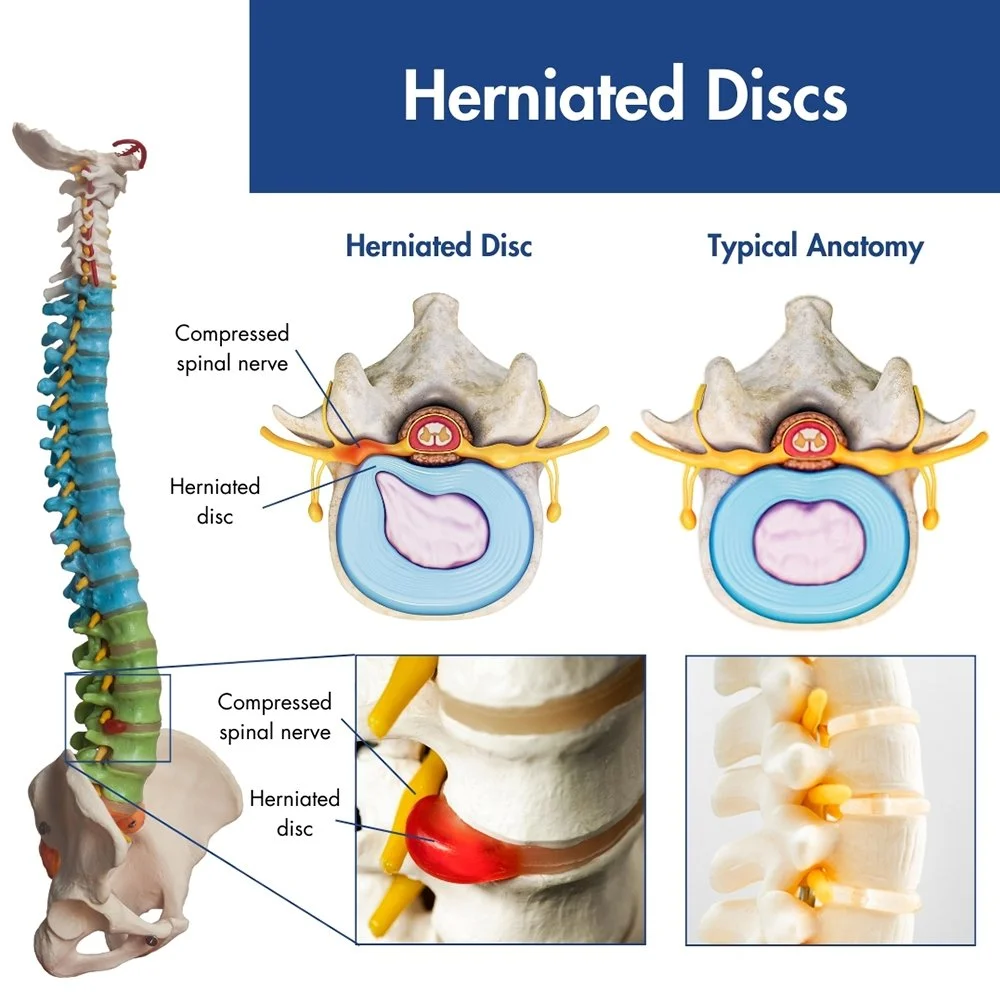
Between each vertebra in your spine sits an intervertebral disc. These discs act as cushions, helping absorb shock while allowing your spine to bend, twist, and move efficiently. A herniated disc occurs when part of the disc pushes outward and irritates nearby structures—sometimes including a spinal nerve.
While not every disc herniation is painful, when symptoms do occur, they often look very different from a muscle strain.
Typical Symptoms of a Herniated Disc
Disc-related pain frequently has characteristics that extend beyond the low back itself. Common symptoms include:
Pain that travels into the buttock or leg
Numbness or tingling
Burning or electric-like pain
Pain that extends below the knee
Symptoms that worsen with prolonged sitting
Pain when bending forward
Difficulty standing fully upright after sitting
Coughing or sneezing can increase symptoms
Weakness in certain muscles of the leg or foot
Many people notice that their leg symptoms are actually more bothersome than their back pain. This is because the irritated nerve—not just the disc itself—can contribute to pain farther down the leg.
Comparing the Two
Although every patient is different, there are several characteristics that commonly help distinguish these conditions.
A Muscle Strain Often Looks Like This:
Pain stays primarily in the low back
Muscles feel tight or sore
Pain increases when contracting or stretching the injured muscle
Muscle spasms are common
Rarely causes numbness or tingling
Symptoms gradually improve as the tissue heals
A Herniated Disc Often Looks Like This:
Pain may travel into the buttock, thigh, calf, or foot
Numbness or tingling may be present
Sitting often aggravates symptoms
Bending forward may increase pain
Standing or walking may improve symptoms for some people
Certain movements repeatedly reproduce leg pain
It's important to remember that these are general patterns—not absolute rules. Some people with disc injuries experience only back pain, while others with muscle strains may feel pain in the buttock without nerve involvement. That's why an accurate evaluation is so important.
Why Self-Diagnosis Can Be Misleading
Many people search their symptoms online and immediately assume they have a herniated disc. Others believe they simply "pulled a muscle" and continue pushing through the pain for weeks. The reality is that symptoms alone don't always tell the entire story.
Medical imaging doesn't always provide the answer either. Research has consistently shown that many people without any back pain have disc bulges or herniations visible on MRI. At the same time, someone with significant symptoms may have relatively minor imaging findings. Treating the MRI instead of treating the patient can lead to unnecessary worry and ineffective treatment.
The most important question isn't simply "What does the MRI show?" It's "What is actually causing your symptoms?"
How We Differentiate the Two
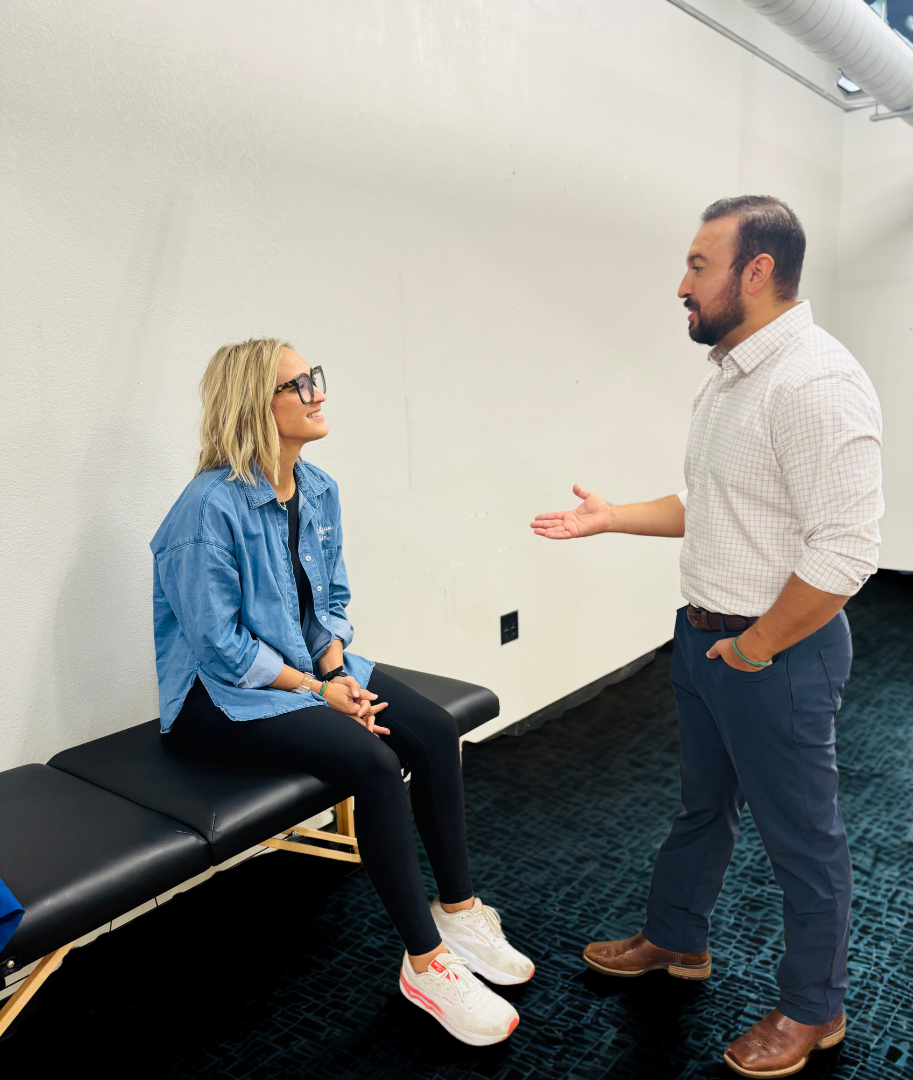
At True Grit Physical Therapy, every evaluation is designed to identify the source of your pain—not just label it. We combine your medical history with a thorough physical examination to understand what's driving your symptoms.
Your evaluation may include:
A discussion of how your symptoms began
Assessment of pain location and symptom behavior
Movement and functional testing
Neurological testing (strength, sensation, and reflexes)
Joint mobility, muscle strength, and flexibility assessment
Special orthopedic tests when appropriate
These findings help us determine whether your symptoms are more consistent with a muscle strain, disc-related pain, joint dysfunction, nerve irritation, or another contributing factor—allowing us to create a treatment plan tailored to your specific needs.
Why the Correct Diagnosis Matters
Treating every episode of back pain the same way often leads to disappointing results.
Someone recovering from a muscle strain may benefit from progressive strengthening and gradual return to activity early in their recovery.
Someone with disc-related pain may initially benefit from different movement strategies that reduce stress on the irritated disc before progressing into strengthening exercises. Using the wrong approach can delay recovery, prolong symptoms, or make certain activities more uncomfortable.
Precision matters.
Our Goal Is to Treat the Cause—Not Just the Pain
Whether your symptoms are coming from a muscle strain, a herniated disc, or another source entirely, our goal is always the same:
Identify the underlying problem.
Restore normal movement.
Build strength and resilience.
Help you return to the activities you love with confidence.
Every patient deserves an individualized treatment plan based on a thorough evaluation—not a one-size-fits-all exercise sheet.
When Should You Seek an Evaluation?
If your low back pain has lasted more than a few days, continues returning, is limiting your daily activities, or is accompanied by pain, numbness, tingling, or weakness into your leg, it's time for a comprehensive evaluation.
The sooner the true source of the problem is identified, the sooner treatment can begin targeting the right issue.
At True Grit Physical Therapy, we take the time to understand your symptoms, identify what's driving your pain, and develop a personalized plan that helps you move confidently again—not just temporarily feel better.