Return to Sport Testing: How Do You Know You're Truly Ready to Play Again?
Quick Breakdown
Pain is only one piece of the recovery process. Just because an athlete feels better doesn't necessarily mean their body is prepared to handle the demands of competition. At True Grit Physical Therapy, we use evidence-based return-to-sport testing to measure mobility, strength, endurance, functional strength, power, movement quality, and sport-specific performance so athletes can return to competition with confidence—not just hope.
Return to Sport Testing: How Do You Know You're Truly Ready to Play Again?
One of the most exciting moments in rehabilitation is hearing an athlete say: "I feel ready to get back." It's also one of the most important moments. However, feeling ready and being ready aren't always the same thing.
Pain often improves before the body has fully regained the strength, power, endurance, and movement quality necessary to safely return to competition. If an athlete returns too soon, they may unknowingly place excessive stress on healing tissues, increasing the risk of another injury. That's why return-to-sport testing has become an essential part of modern sports rehabilitation. Instead of guessing whether an athlete is ready, we measure it.
Pain Is Not the Finish Line
Many athletes judge their recovery by one simple question: "Does it still hurt?" While pain is certainly important, it's only one piece of the puzzle. An athlete may have:
· Full range of motion
· Minimal pain
· Excellent motivation
· Medical clearance
...and still not possess the physical capacity required for their sport.
For example, an athlete recovering from an ACL reconstruction may have no knee pain but still demonstrate significant weakness during jumping and landing. A baseball player may have a pain-free shoulder but lack the endurance needed to throw 80 pitches. A soccer player may sprint well in a straight line but struggle to cut, pivot, or decelerate safely. These deficits aren't always obvious until they're tested.
Why Objective Testing Matters
Return-to-sport decisions shouldn't rely solely on time or how an athlete feels. Every athlete heals differently. Some regain strength quickly. Some regain mobility quickly, but continue to lack power. Some compensate remarkably well, masking underlying deficits that become apparent only during more demanding movements. Objective testing allows us to measure recovery rather than estimate it.
Instead of saying, "You look pretty good," we can confidently say, "Here's exactly how your injured leg compares to your uninjured leg, and here's what still needs to improve before returning to full competition." This provides athletes, parents, coaches, physicians, and therapists with clear, measurable information to guide return-to-play decisions.
What We Evaluate
At True Grit Physical Therapy, return-to-sport testing goes far beyond checking pain or range of motion. We evaluate the qualities athletes actually need to compete safely and effectively.
Mobility
Athletes need adequate joint mobility to perform efficiently. We assess whether the hips, ankles, shoulders, spine, or other joints move appropriately for the demands of their sport. Limited mobility often forces compensations elsewhere in the body, increasing injury risk.
Strength
Strength is one of the strongest predictors of successful return to sport. We assess whether the injured muscles have regained sufficient force production compared to the opposite side and whether important muscle groups are working together effectively. Strength deficits frequently persist long after pain has resolved.
Endurance
Many sports aren't decided by what happens during the first minute. They're decided by what happens after fatigue sets in. Muscular endurance allows athletes to maintain proper movement quality throughout an entire practice or game. Without adequate endurance, movement mechanics often deteriorate, increasing stress on joints and soft tissues.
Functional Strength
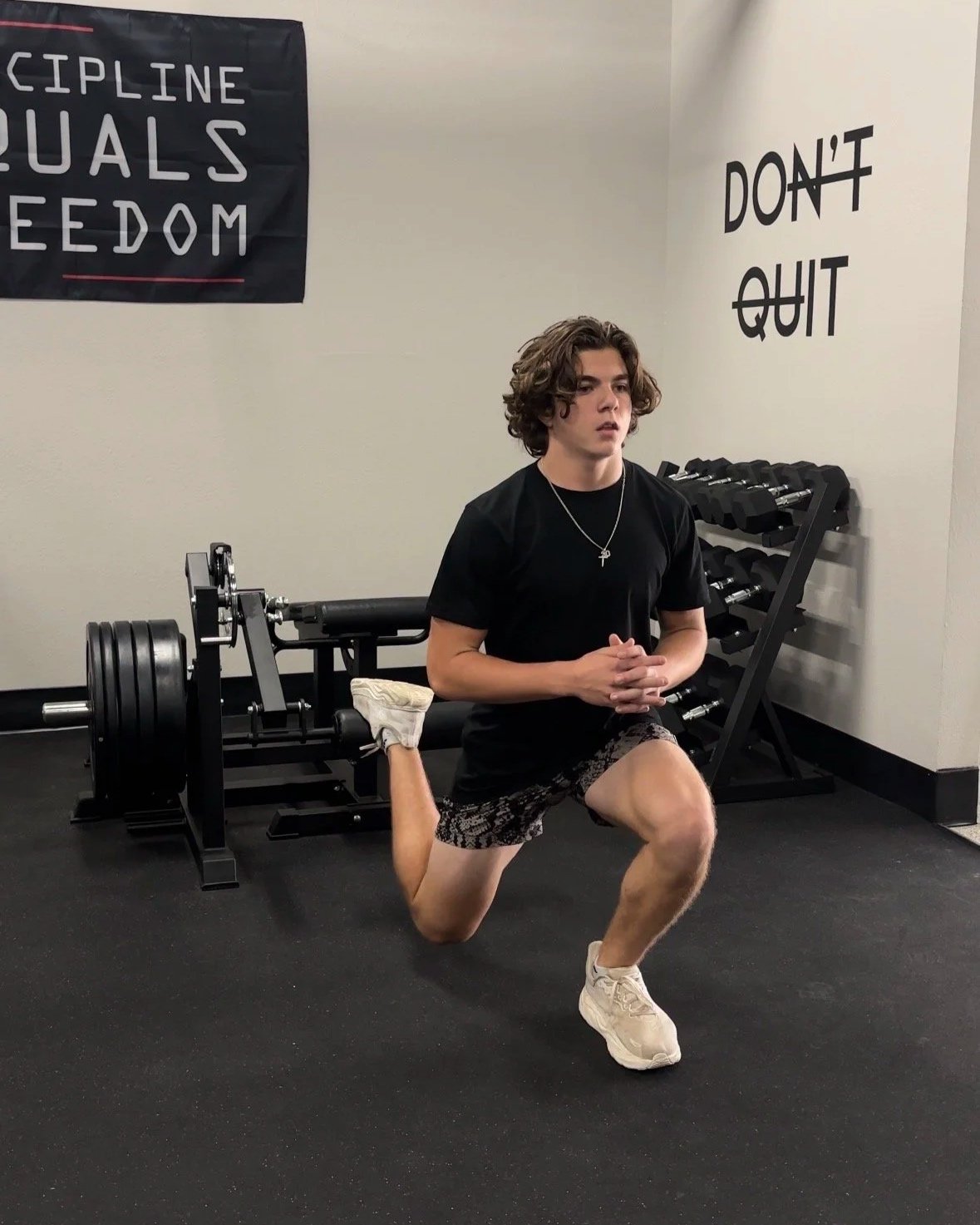
Lifting weights in the gym is important. Applying that strength during athletic movement is even more important. Functional strength testing evaluates how well athletes control their body during activities such as:
· Single-leg squats
· Step-downs
· Lunges
· Single-leg bridges
· Dynamic balance tasks
· Multi-directional movements
These tests reveal movement compensations that traditional strength testing may miss.
Power
Many sports require explosive movements. Jumping. Sprinting. Cutting. Throwing. Changing direction. Power testing helps determine whether an athlete can rapidly generate force while maintaining excellent movement quality. We may assess:
· Vertical jump performance
· Broad jump distance
· Single-leg hop tests
· Triple hop tests
· Crossover hop tests
· Repeated hopping ability
These tests provide valuable information about lower extremity symmetry, force production, and confidence.
Movement Quality
An athlete can pass a strength test and still move poorly. That's why movement quality remains one of the most important parts of our evaluation. We assess:
· Landing mechanics
· Single-leg stability
· Trunk control
· Hip control
· Knee alignment
· Balance
· Deceleration mechanics
· Rotational control
Our goal isn't simply to determine whether an athlete can complete a task. We want to determine how they complete it. Poor movement quality often reveals compensations that contribute to recurring injuries.
Sport-Specific Testing
Every sport places unique demands on the body. A volleyball player needs different physical qualities than a baseball pitcher. A runner requires different testing than a football linebacker. That's why return-to-sport testing should always reflect the athlete's individual sport. Depending on the athlete, testing may include:
· Sprinting
· Cutting and change-of-direction drills
· Acceleration and deceleration
· Agility drills
· Jumping and landing
· Throwing progression
· Running analysis
· Sport-specific endurance testing
· Position-specific movement patterns
The closer testing resembles competition, the more confidence we gain that the athlete is truly prepared to return.
Confidence Is Part of Recovery
Physical readiness isn't the only factor that matters. Athletes also need confidence. After an injury, many athletes hesitate to cut, jump, or fully trust the injured limb—even after it has physically healed. Objective testing helps bridge that gap. Seeing measurable improvements in strength, power, and performance often gives athletes the confidence they need to return to competition without fear. Confidence isn't built through reassurance alone. It's built through preparation.
Return to Sport Is a Process—Not a Date
One of the biggest misconceptions in sports medicine is that an athlete reaches a certain number of weeks after surgery or injury and is automatically cleared to play. Healing timelines are important, but they tell only part of the story. Returning at six months...Nine months...Or even twelve months...doesn't guarantee an athlete is physically ready. What matters most is whether the athlete has regained the physical capacity required to safely perform their sport. That's why we emphasize criteria-based progression rather than simply following the calendar.
Our Goal Is More Than Returning to Play
Getting back into the game is important. Staying in the game is even more important. Our goal isn't simply to help athletes participate in their first practice. It's to help them complete an entire season with confidence. By combining evidence-based testing with individualized rehabilitation, we identify remaining deficits before they become future injuries.

The Bottom Line
Returning to sport is one of the most important decisions an athlete, parent, coach, and healthcare provider will make. It shouldn't be based on guesswork. At True Grit Physical Therapy, we use objective, evidence-based return-to-sport testing to evaluate mobility, strength, endurance, functional strength, power, movement quality, and sport-specific performance. This comprehensive approach allows us to make informed recommendations and helps athletes return to competition with confidence. Because success isn't measured by how quickly you return. It's measured by how well you're prepared to stay healthy once you do.